Quick Read Scorecard
| Category | Points | Overall |
| Company Overview | Stock ticker: TSXV: MANU / OTC: MAUUF / FRA: J5B Main metal: Uranium Secondary exposure: Vanadium optionality in Utah and Colorado uranium-vanadium districts Project phase: Early exploration / historical resource validation / district consolidation Main projects: I-70, San Rafael, Lisbon Valley, La Sal, Uravan, Apex, Murmac, Strike Projects country: United States and Canada | — |
| 1. Management | Previous successful project, discovery, mine build or company sale: Yes Exploration to development experience: Yes Big mining company / uranium industry experience: Yes Capital markets track record: Yes Management has strong uranium-sector credibility, including William Sheriff, Garrett Ainsworth, Douglas Underhill and John Hamrick. | ✅ Strong |
| 2. Projects | High grades: Mixed but promising MRE size: Historical estimate of approximately 9.662M lbs U3O8, but not current NI 43-101 Optionality: Yes, with multiple U.S. districts, Apex, Athabasca projects, vanadium optionality and possible M&A/consolidation upside Project phase: Early developer story | ✅ Good |
| 3. Cost Structure | Low AISC: Unknown; no production, PEA, PFS, DFS or AISC Low capex / Existing infrastructure: Potentially positive due to past-producing mines, underground workings, some permits and proximity to White Mesa Mill, but no defined economics yet | ⚠️ Unknown / Too Early |
| 4. Share Structure Discipline | Fully diluted shares: 152,767,185 Presentation share price: C$0.39 Fully diluted market cap estimate: approximately C$59.6M Cash: approximately C$12.3M Debt: None | ✅ Strong |
| 5. Insider / Ownership | Insider ownership: as of May 2026, individual insiders hold around 2.5% and retail holds more than 96%. Strategic ownership needs confirmation from post-transaction filings. The ownership picture is not as strong as the management quality. | ⚠️ Weak |
| 6. Location | Country: United States and Canada U.S. locations: Utah, Colorado, Nevada Canada location: Saskatchewan, Athabasca Basin Jurisdiction tier: Tier 1 Districts: San Rafael, Lisbon Valley, La Sal, Uravan, Apex, Athabasca Basin | ✅ Strong |
Manhattan Uranium Discovery Corp.
TSXV: MANU / OTC: MAUUF / FRA: J5B
Introduction
Manhattan Uranium Discovery Corp is an early-stage North American uranium exploration and development company focused on building a district-scale uranium platform across the United States and Canada.
The company was formerly Aero Energy Limited and became Manhattan Uranium Discovery Corp after completing the acquisitions of Urano Energy and Pegasus Resources in May 2026. This combination created a larger uranium vehicle with 15 past-producing uranium mines across 25 U.S. properties, plus discovery-stage uranium exposure in Saskatchewan’s Athabasca Basin.
The investment case is simple. Manhattan Uranium is trying to position itself directly in the middle of the North American uranium supply rebuild. The company has exposure to past-producing uranium districts in Utah, Colorado and Nevada, plus high-grade discovery potential in the Athabasca Basin. This gives Manhattan two different types of upside, U.S. conventional uranium restart and resource validation potential, plus Canadian high-grade exploration discovery potential.
The strongest part of the story is the scale relative to the market cap. Manhattan is not just holding one small early-stage uranium prospect. It controls a broad portfolio across multiple proven uranium districts, including the San Rafael, Lisbon Valley, La Sal, Uravan, Apex, Murmac and Strike project areas. The company also has historical resource estimates across multiple projects, although these are not current NI 43-101 mineral resources and should be treated carefully.
The main risk is also very clear. Manhattan Uranium is still early. It does not yet have a current NI 43-101 resource across most of the U.S. portfolio, it does not have a PEA, PFS, DFS, reserve, AISC estimate, production guidance or defined construction timeline. This is not a producer and not yet a near-producer. It is a uranium exploration and resource-validation story with large optionality.
The bull case depends on three things. First, Manhattan needs to validate and upgrade historical uranium resources into modern compliant resources. Second, it needs to deliver successful drilling at Apex, I-70, Murmac and Strike. Third, the uranium market and U.S. nuclear fuel security theme need to remain strong enough for investors to reward domestic uranium exposure.
Why Uranium Why Now

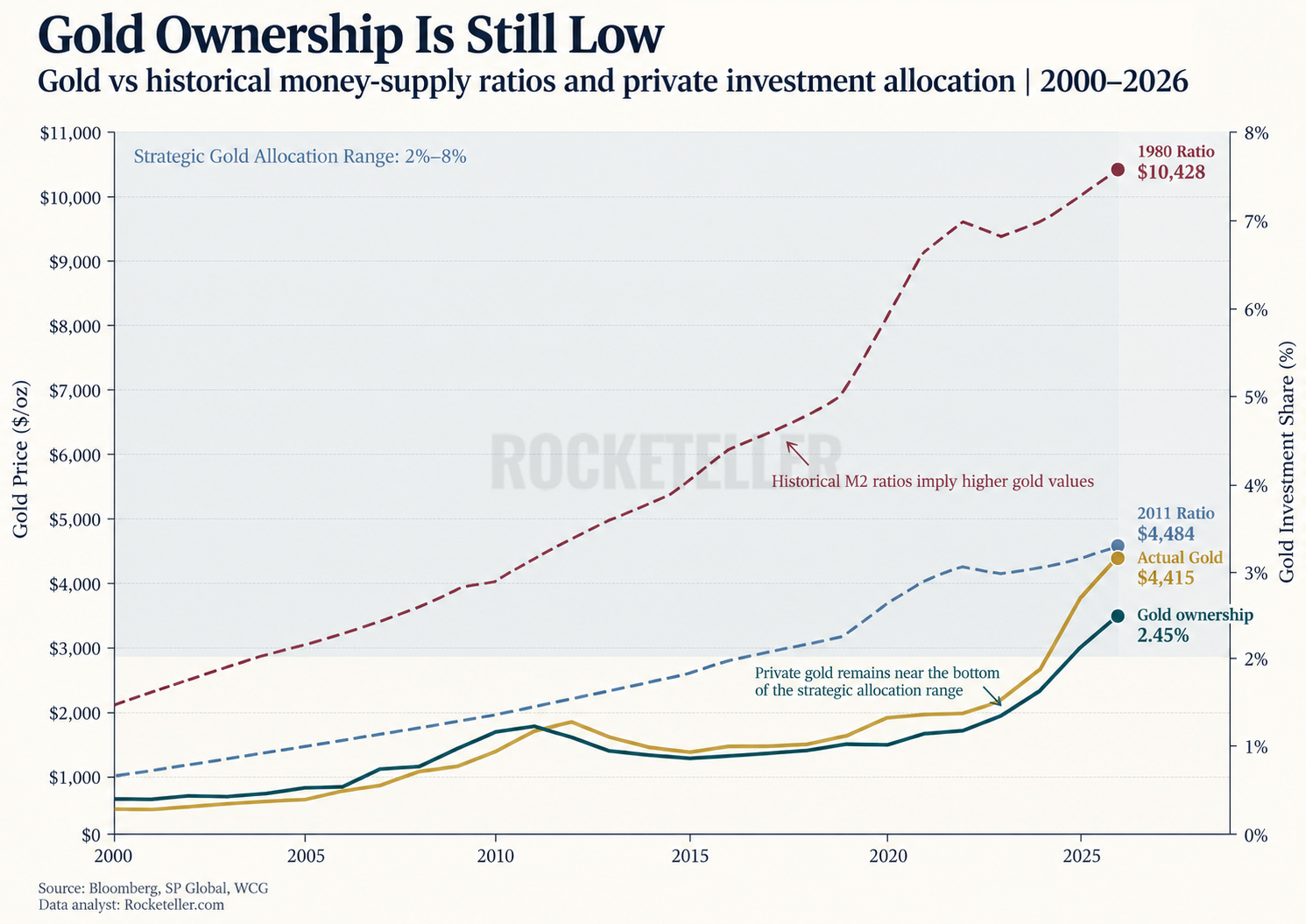
According to Sprott, uranium miners may be positioned for significant upside as a major supply-demand imbalance reshapes the nuclear fuel market. Even if existing and planned mines operate at peak historical production, supply is still not expected to meet reactor demand through 2045. The gap is huge, around 1.4 billion pounds by 2045 under current trends and over 3 billion pounds if global nuclear capacity triples by 2050. With reactor restarts, life extensions and new builds accelerating worldwide, uranium demand is rising fast, creating a compelling long-term opportunity for miners.

As the chart shows, over the past 5 years, uranium and uranium miners have crushed equities and broader commodity benchmarks, yet uranium prices remain well below their all-time highs. That tells us this bull market may still have room to run. The strength is not hype, it is backed by improving fundamentals as nuclear power gains global momentum. The next stage could be driven by aggressive utility contracting and faster demand growth. For miners, higher uranium prices can expand margins, increase reserve values, improve project economics and open the door to new growth. That makes uranium miners a powerful way to capture this cycle. Here is where Manhattan Uranium Discovery comes to play.
Projects / Location / Historical Resources
The Anchor: U.S. Uranium Portfolio (Colorado Plateau, Utah & Colorado)
Manhattan’s U.S. portfolio is the core of its domestic uranium supply strategy. The company controls 25 U.S. projects across Utah, Colorado, and Nevada, covering more than 25,000 acres. This extensive land package includes 15 past-producing uranium mines with documented historical production, underground development, historical drilling and defined mineralized trends.
The primary investment appeal is that Manhattan is not starting from scratch. By focusing on proven historical mining districts, the company aims to consolidate fragmented ownership, compile and digitize historical data, validate legacy work and target the most promising areas for modern confirmation drilling.
| Main U.S. District / Project | State | Why It Matters |
| San Rafael District | Utah | Historical uranium-vanadium district and location of the high-priority I-70 project. |
| Lisbon Valley District | Utah | Utah’s most prolific uranium-producing district; hosts the North Lisbon and Sun projects. |
| La Sal District | Utah | Past-producing uranium-vanadium district within the broader Colorado Plateau portfolio. |
| Uravan District | Colorado | Historic uranium-vanadium district offering regional consolidation optionality. |
| Apex Project | Nevada | Past-producing Nevada uranium mine representing one of the company’s highest-impact drill catalysts. |
The company’s U.S. strategy relies on a hub-and-spoke concept. By building scale across multiple conventional projects, Manhattan positions itself to potentially benefit from regional processing infrastructure. Most notably, these assets sit in relative proximity to the White Mesa Mill in Utah, the only operating conventional uranium mill in the United States.
Proximity to a conventional mill is a major logistical advantage in the U.S. Southwest. However, investors should note that Manhattan does not currently have a toll-milling or processing agreement. Proximity enhances strategic optionality, but project economics remain dependent on successful future resource validation and drilling.
Supporting Data: Broader Colorado Plateau Historical Resource Portfolio
To understand the sheer scale of the consolidated land package, the table below outlines the historical resource footprint across the U.S. portfolio. These legacy estimates serve as the foundation for Manhattan’s domestic resource validation campaign.
| Portfolio Metric | Value |
| Historical Tonnage | 3.620 million tons |
| Average Grade | 0.12% U3O8 |
| Total Historical Estimate | 9.662 million lbs U3O8 |
| Projects Included | Bachelor, Bull Canyon, Chips, Deer Nil, Dulaney, Eagle, Eula Belle, I-70, Hop Creek, King Pin, La Sal Creek, North Lisbon, October, Spud Patch, Sun, Vanadium Queen, and Apex |
These historical estimates are not current NI 43-101 compliant resources. Converting them requires extensive data compilation, modern QA/QC and confirmation drilling. Until compliant resources are published, this 9.6-million-pound figure represents exploration and validation optionality rather than bankable asset value.
U.S. Key Assets High-Impact Priority
Manhattan is not trying to develop all 25 properties at once. The company is focusing on three U.S. assets with the best mix of past production, historical drilling, permits and high-grade potential.
- I-70 Project Utah
I-70 is the most advanced asset. It already has a mining permit, old underground workings, many historical drill holes, and a historical estimate of about 1.94 million pounds of uranium.
For investors, this is the nearest-term validation asset. - Lisbon and Sun Projects Utah
These projects sit in Lisbon Valley, Utah’s most important uranium district. The area has produced nearly 78 million pounds of uranium historically. Manhattan’s North Lisbon project has the company’s largest U.S. historical estimate at about 3.35 million pounds of uranium.
For investors, this is the scale asset. - Apex Project Nevada
Apex is Manhattan’s main exploration catalyst. It was Nevada’s largest past-producing uranium mine and has strong historical grades, underground development, and drill permits already in place.
For investors, this is the high-grade upside asset. - Project Grade Profile A Balanced, Multi-Tiered Strategy
Manhattan features a highly strategic, mixed grade profile that bridges two distinct investment narratives, domestic resource consolidation and high-grade Canadian exploration.
| Asset Class | Grade Range | Strategic Role |
| U.S. Conventional Portfolio | ~0.12% U3O8 | Establishes a large-scale, near-surface tonnage foundation close to operating infrastructure (White Mesa Mill). |
| U.S. High-Grade Catalysts | 0.37% – 0.51% U3O8 | Provides high-grade conventional intercepts (e.g. Apex Mine) to drive near-term resource expansion and market attention. |
| Canadian Athabasca Projects | 1.79% – 27.0% U3O8 | Delivers high-grade discovery torque capable of rapidly re-rating the company’s valuation. |
The Grade vs. Maturity Balance: The asset quality is solid across both jurisdictions. The primary risk is not the grade profile, but rather the technical maturity of the portfolio. Manhattan remains an early-stage developer, converting these diverse grades into compliant, economic resources remains the central execution challenge for 2026.
Canadian Athabasca Projects High-Grade Discovery Torque
To contrast the resource-validation focus of the U.S. assets, Manhattan maintains two highly prospective projects in Saskatchewan’s Athabasca Basin, providing investors with pure, high-grade exploration upside.
Murmac Project
Murmac is Manhattan’s primary Canadian discovery engine, offering shallow, high-grade exploration exposure in one of the world’s premier uranium jurisdictions.
- The Discovery Spark: A 2024 discovery hole intersected 8.4 meters of 0.30% U3O8, which included an ultra-high-grade core of 1.2 meters at 1.79% U3O8.
- Exploration Footprint: The project hosts multiple EM conductor trends spanning over 50 kilometers of strike, supported by radioactive groundwater springs venting up to 15,000 counts per second.
- Shallow Target Depth: Mineralization is shallow, sitting between 20 and 150 meters below surface, which significantly reduces drilling costs compared to deeper Athabasca plays.
- Fully Funded Catalyst: A 25-to-30-hole drill program is fully funded and scheduled for H2 2026. While Athabasca exploration is high-risk, a single major discovery here could dramatically re-rate Manhattan’s valuation.
Strike Project
Strike serves as Manhattan’s secondary Athabasca asset, offering shallow, target-rich exploration that complements Murmac’s discovery-focused program.
- Proven High-Grade System: Historical mining at the Tena Zone reportedly extracted over 1,000 tons of material graded at 0.6% to 3.5% U3O8. Legacy grab samples are exceptionally high-grade, reaching up to 23% and 27% U3O8.
- Shallow Target Depth: Exploration targets are shallow, ranging between 60 and 105 meters below surface.
- Drill-Ready Pipeline: The company has identified 14 targets, including 11 brand-new targets and 3 drill-ready follow-ups along EM conductors previously tested by Fortune Bay (which hit anomalous uranium in 3 of 9 holes).
Strike Strike is a high-optionality asset. While Murmac remains the primary Canadian focus, Strike’s shallow, high-grade footprint represents a potent secondary catalyst if upcoming drill campaigns hit broader mineralization.
Catalysts
| Timeline | Expected Catalyst |
| 2026 | Multiple drill programs planned across the portfolio. |
| Drilling at the I-70 Uranium Project in Utah. | |
| Drilling at Murmac and Strike in the Athabasca Basin. | |
| Drilling at Apex Uranium Mine in Nevada after approval for up to seven drill pads. | |
| Historical data compilation and evaluation. | |
| Work toward updating historical resource estimates to NI 43-101 compliance. | |
| Advancement of U.S. critical mineral strategy and further district consolidation evaluation. | |
| H2 2026 | Fully funded 25 to 30 hole drill program planned at Murmac. |
| Priority drilling across Murmac and Strike, follow-up testing at Apex. | |
| Medium Term | Potential NI 43-101 resource updates and possible technical studies if resources are validated. |
| Longer Term | Potential transition from exploration story to resource-stage uranium developer and possible strategic interest from uranium producers or fuel-cycle participants. |
Expected Timeline to Production
| Year / Period | Expected Progress |
| 2026 | Drilling, validation and consolidation year. Focus is priority targets, historical data, historical resource validation and turning the combined portfolio into a coherent uranium platform. |
| 2027 | If drilling is successful, this could become the year for more meaningful resource updates and technical reports. The key milestone would be converting historical estimates into modern compliant resources. |
| 2028 onward | If resources are validated and uranium market conditions remain strong, selected projects could move toward economic studies. A production timeline remains speculative because there is no PEA, PFS, reserve, processing agreement or mine development plan yet. |
Share & Capital Structure
As of the May 2026 Manhattan Uranium presentation, the company reported the following capital structure:
| Capital Structure Item | Value |
| Share price | C$0.39 |
| Basic shares outstanding | 110,080,518 |
| Market capitalization | C$42.9M |
| Options | 8,382,519 at average strike of C$1.57 |
| Warrants | 34,304,148 at average strike of C$0.63 |
| Fully diluted shares | 152,767,185 |
| Debt | None |
| Estimated cash and equivalents | C$12.3M |
| Rough fully diluted market cap | Approx. C$59.6M |
| Estimated enterprise value | Approx. C$47.3M |
People / Management
| Person | Role | Assessment |
| William Sheriff | Chairman | Very strong. More than 40 years of minerals and securities experience, co-founder and Chairman of Energy Metals Corp, sold for approximately $1.8B in 2007. |
| Galen McNamara | CEO and Director | Strong exploration and capital markets profile with uranium-sector experience and broader public company experience. |
| Spencer MacLean | President | Useful legal and capital markets background for a consolidation story. |
| Douglas Underhill | Chief Geologist | Major technical uranium asset with around 50 years of international experience, including around 40 years focused on uranium. |
| Garrett Ainsworth | Director | Strong uranium discovery background, including Patterson Lake South / Triple R experience. |
| John Hamrick | Director | Useful metallurgical, permitting, environmental and uranium processing experience. |
| Grace Marosits | Director | Adds board depth, though more detailed public information would be needed for deeper assessment. |
| Carson Halliday | CFO | Important for managing a larger asset base, shareholder base and multi-jurisdiction work programs. |
Management is the Manhattan’s strongest advantages. The board and technical team include people with uranium discovery, uranium consolidation, capital markets, metallurgy, permitting and historical U.S. uranium experience.
This is exactly what a company like Manhattan needs. The company is not at the mine-building stage yet. The current challenge is asset consolidation, historical data validation, drilling execution, resource conversion and investor market positioning. On those fronts, the team looks strong.
Kay Risks
| Key Risk | Why It Matters |
| Historical Resource Risk | Most U.S. resource estimates are historical and are not current NI 43-101 mineral resources or reserves. |
| Resource Conversion Risk | The company must compile data, verify holes, possibly twin historical drilling, complete modern drilling and prepare compliant reports. |
| Exploration Risk | Murmac, Strike, Apex and other targets still require drilling; strong showings do not guarantee a major discovery. |
| No PEA / PFS / DFS Yet | There is no AISC, capex estimate, mine plan, production rate, reserve, NPV, IRR or payback period. |
| Permitting Risk | Uranium projects can face more environmental and regulatory scrutiny than many other minerals. |
| Processing Risk | Proximity to White Mesa Mill does not guarantee toll milling, processing agreements or project economics. |
| Financing Risk | More financing will likely be needed if the company advances multiple projects aggressively. |
| Dilution Risk | Future drilling, studies, acquisitions and corporate growth could require more share issuance. |
| Commodity Price Risk | The company’s value is highly dependent on uranium sentiment and uranium equity appetite. |
| Execution Risk | The portfolio is broad; management must prioritize the highest-impact assets and avoid spreading capital too thin. |
Why Is It So Undervalued?
Valuation
Important Valuation Note Manhattan Uranium remains a pre-production exploration and resource-validation company with no current production, no PEA/PFS/DFS, no reserves and no defined cash-flow model. Traditional DCF or free-cash-flow valuations are therefore not yet appropriate.
We use two complementary frameworks:
- Optionality model (historical pounds + exploration upside)
- Hypothetical long-term earnings model (illustrative only, based on successful execution and uranium bull market assumptions)
Key Inputs (as of late May 2026)
| Input | Value |
| Fully diluted shares | 152,767,185 |
| Cash and equivalents | ~C$12.3M |
| Historical resource estimate | ~9.662M lbs U3O8 |
| Share price (recent) | ~C$0.38 – C$0.39 |
| Fully diluted market cap | ~C$58 – C$60M |
| Enterprise value | ~C$46 – C$48M |
Current Enterprise Value Per Historical Pound
C$47M EV / 9.662M historical lbs ≈ C$4.85 – C$4.90 per lb. This reflects a meaningful discount due to non-compliant resources and execution risk.
- Uranium Price Scenario Sensitivity (Optionality Model)
Higher uranium prices ($100–$150/lb) typically expand per-pound multiples for juniors with district-scale assets and past-production history.
| Scenario | Value | Implied Optionality per lb | Historical Uranium Value | + Cash | Total Implied Value | Implied Share Price |
| Conservative (~$85/lb) | 152,767,185 | C$5 | C$48.3M | C$12.3M | C$60.6M | C$0.40 |
| Bull Case ($100/lb) | ~C$12.3M | C$10 – C$15 | C$96.6M – C$144.9M | C$12.3M | C$108.9M – C$157.2M | C$0.71 – C$1.03 |
| Strong Bull Case ($150/lb) | ~9.662M lbs U₃O₈ | C$20 – C$30 | C$193.2M – C$289.9M | C$12.3M | C$205.5M – C$302.2M | C$1.35 – C$1.98 |
2. Illustrative Long-Term Earnings-Based Valuation
This is a highly speculative forward-looking scenario assuming Manhattan successfully converts historical resources, advances key projects to production via toll milling, and operates in a strong uranium price environment ($100–$150/lb).
| Assumption | Details |
| Revenue Projection | Hypothetical production ramp starting ~2029–2030. • Year 3 (2029): ~300,000 – 500,000 lbs U₃O₈ • Year 5 (2031): ~800,000 – 1.2M lbs U₃O₈ • Year 10 (2036): ~1.5M – 2.5M lbs U₃O₈ |
| Uranium Price Impact | At $100/lb: Year 5 revenue ~C$110M – C$165M At $150/lb: Year 5 revenue ~C$165M – C$248M (Illustrative only) |
| Profit Margin | 35–45% net margin (reasonable for toll milling conventional producers) |
| Future P/E Multiple | 12x – 18x forward earnings |
| Discount Rate | 12–15% (reflects small-cap junior miner risk profile) |
Illustrative Valuation Outcomes
| Scenario | Production | Revenue | Net Profit | Market Cap (15x) | Implied Share Price (Undiscounted) | Discounted Present Value |
| Year 5 (2031) | ~1M lbs | ~C$165M | ~C$66M | ~C$990M | ~C$6.50 | C$3.00 – C$3.80 |
| Year 10 (2036) | ~2M lbs | ~C$330M | ~C$132M | ~C$2.0B | ~C$13+ | C$4.50 – C$6.00+ |
Simple Interpretation, at the current ~C$0.39 share price, Manhattan trades at a deep discount to both its historical pound optionality and any realistic long-term production success case in a $100–$150/lb uranium environment. Upside is significant if the company executes on resource conversion, drilling catalysts, and benefits from the structural uranium supply deficit. Downside is equally real: delays, disappointing drill results, or a weaker uranium market could keep the stock suppressed for years. This remains a high-risk, high-optionality story. All figures are illustrative and depend heavily on execution and commodity prices. Investors should conduct their own due diligence.
⭐ RT Rating, Commentary
We would rate this as 3 out of 5 stars.
Manhattan Uranium has the ingredients of a very interesting uranium speculation, a strong uranium management team, a large North American portfolio, multiple past-producing U.S. uranium assets, historical resource estimates, drill-ready targets, high-grade Athabasca discovery exposure, cash in the treasury, no debt and direct leverage to the U.S. nuclear fuel security theme.
The best part of the story is the scale versus valuation. Manhattan is not a one-project developer. It now controls a broad uranium platform across Utah, Colorado, Nevada and Saskatchewan. If the company can validate historical resources and deliver strong drilling, the market could begin treating Manhattan as a serious North American uranium consolidation vehicle rather than just another early-stage developer.
Apex is probably the most exciting near-term U.S. catalyst because it has past production, underground workings, high-grade historical intercepts and drill approval. Murmac and Strike add Athabasca discovery torque. I-70 and Lisbon Valley provide historical resource scale and potential future resource conversion.
The main drawback is technical maturity. Manhattan still does not have current NI 43-101 resources across most of the portfolio, no PEA, no PFS, no AISC, no production plan and no economic study. Investors are buying optionality, not proven cash flow.
Overall, Manhattan Uranium is a high-risk, high-upside uranium exploration and consolidation story. For investors looking for early-stage uranium torque in North America, this is a company worth watching closely in 2026.
Join RockeTeller
At RockeTeller, we do not just chase stories. We hunt for rare mining stocks with the right mix of criteria. Every company is tested through our specific checkbox before it earns a place on our watchlist. We ask the hard questions that matter most: Is this a stock we would actually back, what is the realistic target price, and how strong is the risk-reward. Our watchlist is reserved for high-quality setups with real multibagger potential, not hype. If you want serious deep-dive research with conviction, subscribe to RockeTeller.com.