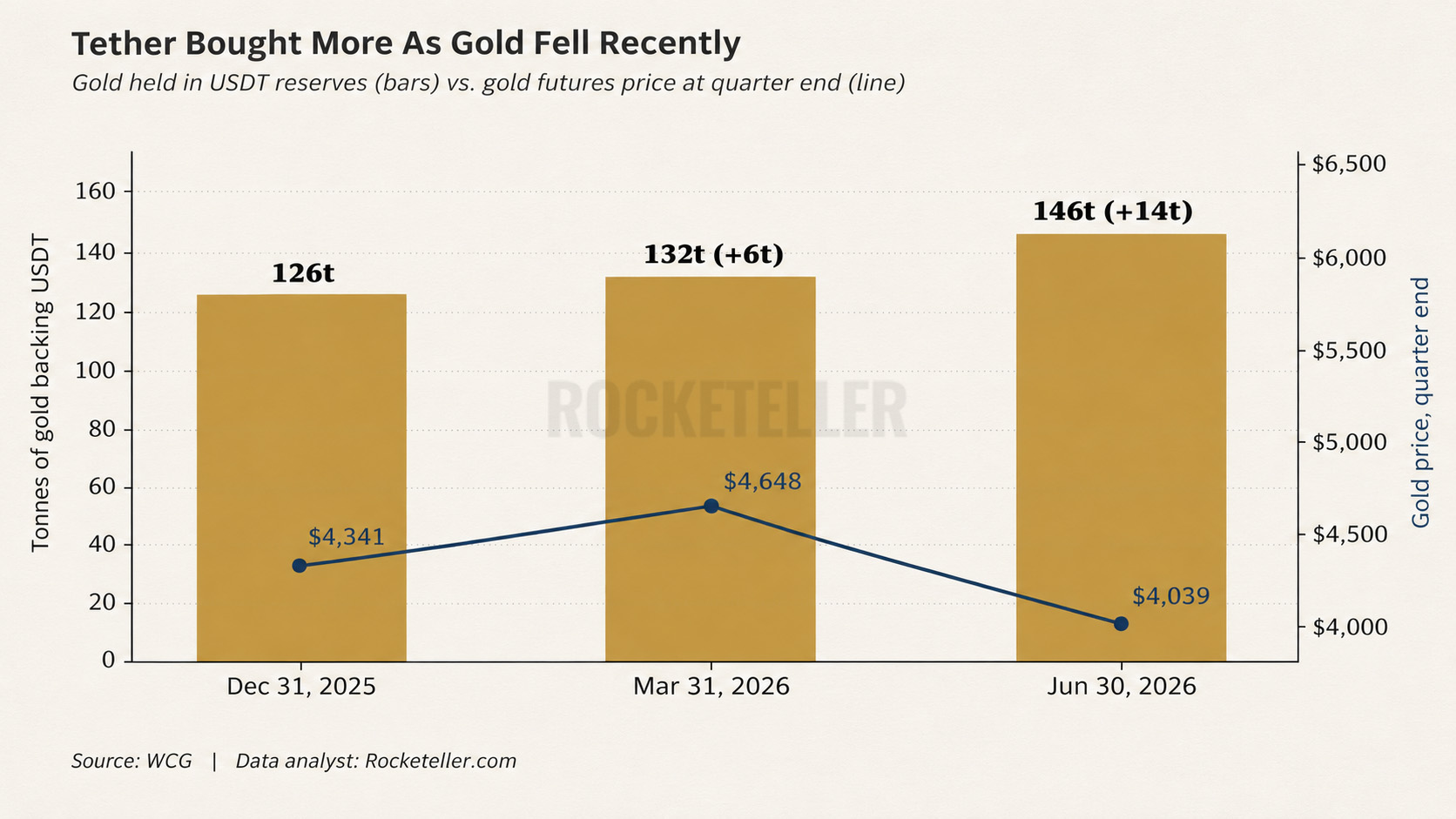
Gold was falling, traders were getting nervous, and Tether? Well, Tether was adding more. Look at the chart. At the end of 2025, Tether held 126 tonnes of gold backing USDT. By March 2026, that climbed to 132 tonnes. Then June arrived, gold futures dropped from $4,648 to $4,039 an ounce, and Tether’s holdings jumped again to 146 tonnes.
Now, why does this matter? Gold struggled as stubborn inflation and expectations of higher US interest rates pushed investors toward yield-bearing assets. Gold pays no interest, so when bond yields look attractive, holding it becomes more expensive.
But Tether’s growing gold reserves tell a different story on the demand side. One major financial player was increasing its exposure even as the market repriced the metal. That could reflect diversification and a desire for reserves beyond traditional paper assets, although the chart alone cannot prove the buying motive.
For commodities, the implications are worth watching. Persistent institutional gold demand can absorb supply and potentially cushion downturns. If dollar strength and real yields eventually ease, that demand could amplify a recovery. Silver and mining shares might benefit too, although they carry additional industrial and operational risks.
Here’s the twist. Prices tell us what traders are doing today. Reserve accumulation hints at what some large holders may be preparing for tomorrow. And those two stories don’t always move together. The question is whether other big buyers follow suit.