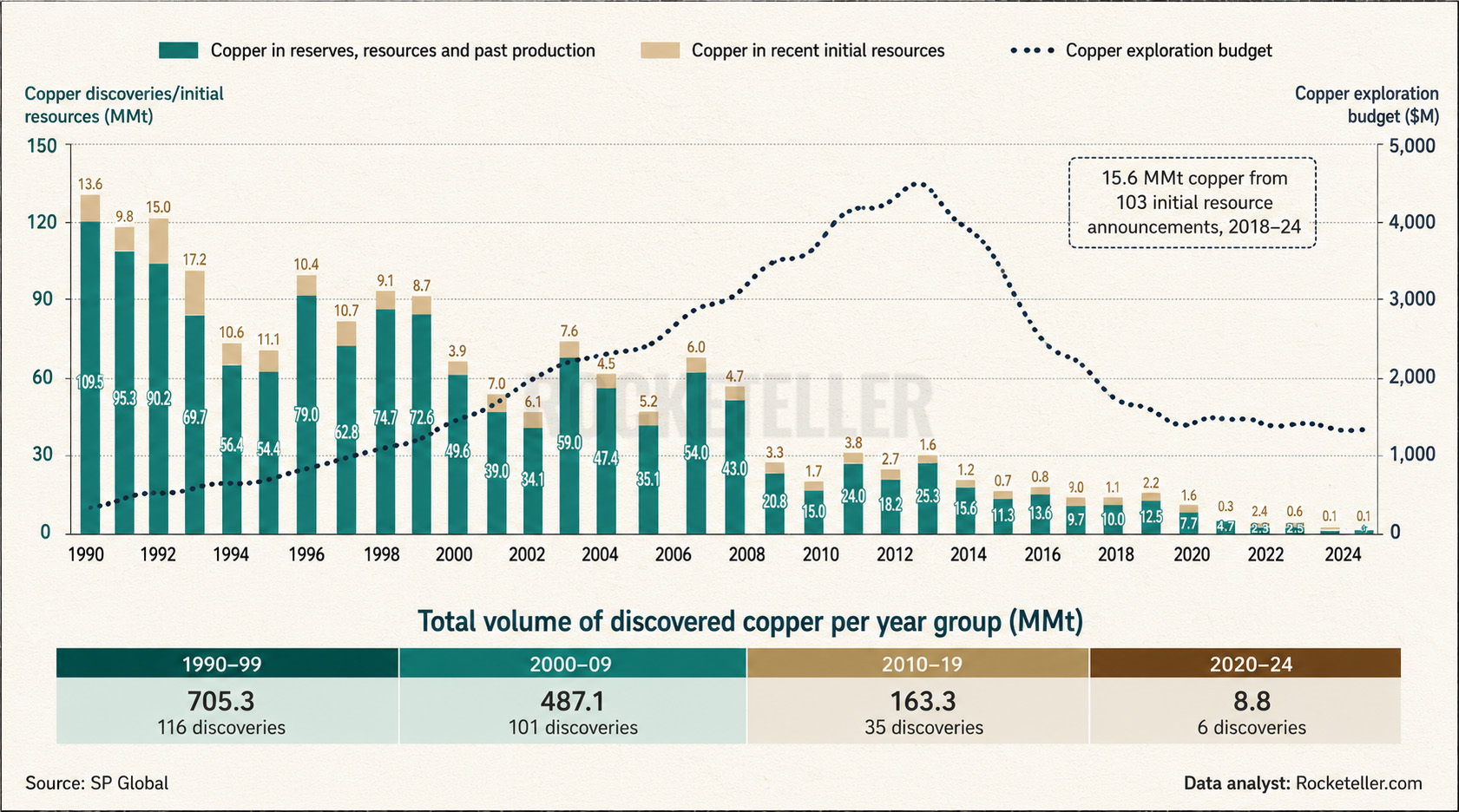
This chart tells an uncomfortable copper story. The world is spending more money looking for copper, yet finding far less of it.
In the 1990s, major discoveries delivered 705.3 million metric tons across 116 discoveries. The 2000s still produced 487.1 million metric tons. Then the pipeline weakened sharply. From 2010 to 2019, discoveries fell to 163.3 million metric tons, and from 2020 to 2024, only 8.8 million metric tons were recorded across six major discoveries. Even 103 initial resource announcements from 2018 to 2024 added just 15.6 million metric tons.
Exploration budgets recovered after the mid 2010s downturn and moved back above 3 billion dollars by 2024. That gap matters. More exploration spending is no longer translating into the same volume of discoveries. The easiest deposits have been found, while new projects are often deeper, lower grade, remote and harder to permit.
For commodities, this creates a delayed supply problem. Copper demand can respond quickly to electrification, grid investment, data centers, renewable energy and industrial growth. New mine supply cannot. If demand accelerates while the discovery pipeline remains thin, inventories become more vulnerable and prices become more sensitive to disruptions. The first beneficiaries are existing producers with long life assets, followed by developers holding economic deposits. Higher prices can eventually trigger more exploration, recycling, substitution and mine investment, but those responses take time.