Since then, gold prices have reached a new high, and crude oil has risen above $80 once more. Many other commodity prices have also increased, although natural gas, iron ore, lithium, wheat, and corn have seen declines.
Are these rising prices indicative of demand surpassing supply, or is the market bracing for potential supply disruptions stemming from the conflicts in Europe and the Middle East?
Today, we will revisit energy and other commodity markets to assess how the outlook has shifted.
Energy and Commodities: Slowing Demand Growth vs. Supply Risks
Commodity markets are experiencing a period of normalization following the pandemic-induced volatility, yet the near-term outlook appears increasingly uncertain. The energy, metals, and agricultural sectors are navigating similar challenges:
- Higher-than-Expected Output: Production levels across various commodities have exceeded forecasts.
- Slowing Demand Growth: As global economic growth decelerates, commodity demand weakens.
- Geopolitical Risks: Ongoing geopolitical tensions add an extra layer of supply risk, impacting market stability.
Oil and Gas: A Tightening Supply Outlook
Despite OPEC+ members implementing production cuts, non-OPEC producers have ramped up output.
- Record U.S. Production: U.S. oil production has surged to 12.9 million barrels daily.
- Surplus Forecast: The International Energy Agency (IEA) anticipates a surplus of supply over demand for the remainder of the year, suggesting potential downward pressure on prices if this trend continues.
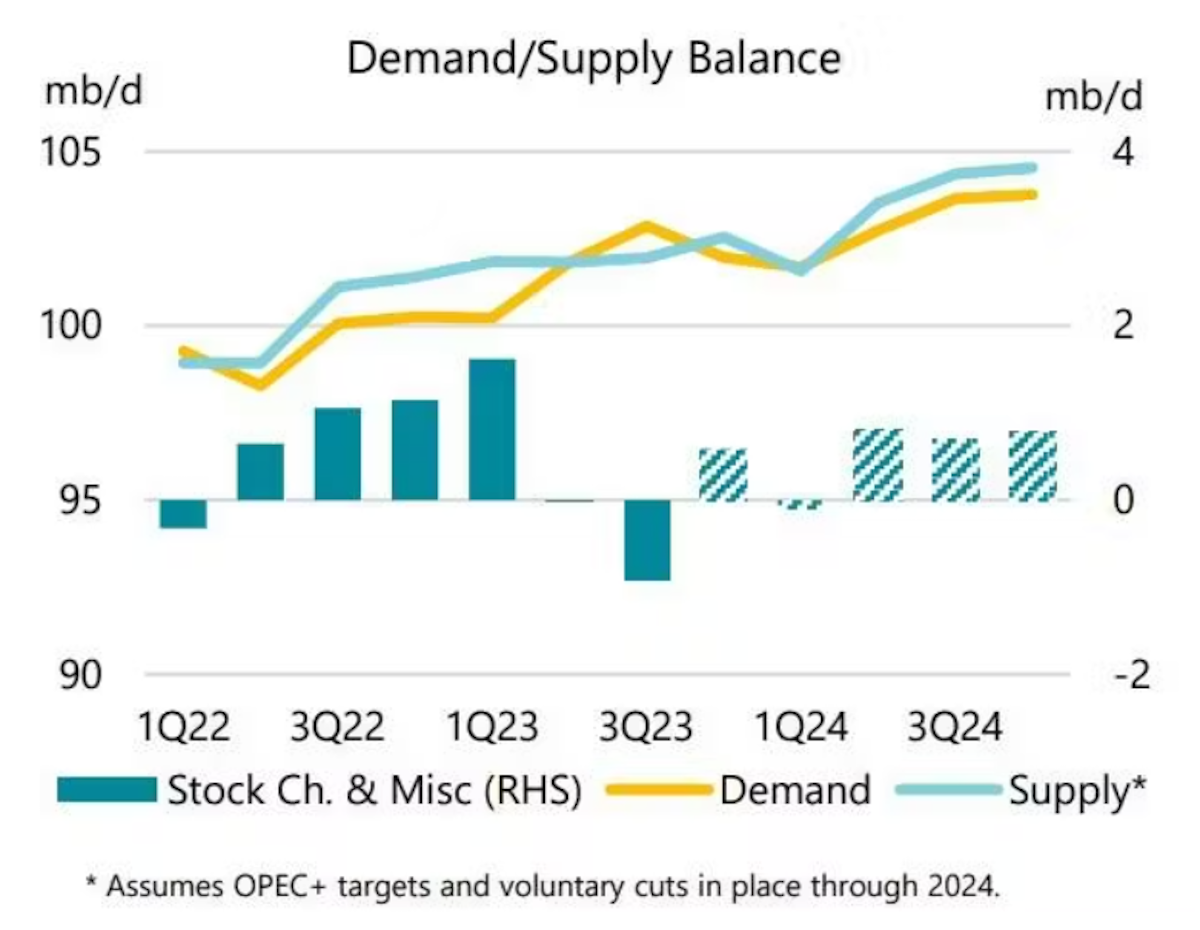
This is expected to stabilize oil prices unless the conflict in the Middle East and the Red Sea disrupts supply.
Looking ahead, supply may become more constrained. The industry is undergoing consolidation, with major producers concentrating on efficiency and profitability.
Three significant acquisitions have recently been made: ExxonMobil has purchased Pioneer Natural Resources, Chevron has taken over Hess, and Diamondback Energy has acquired Endeavor Energy Partners.
Historically, oil companies prioritized expansion, but with the shift toward cleaner energy, their attention is now on high-margin assets. This strategy positions them favorably if demand growth decelerates due to increased renewable energy sources, though it could also lead to a much tighter market in the future.
The shift in focus from size to profitability is a crucial driver of Exxon’s investment narrative.
Natural gas prices remain low following the volatility of 2022. The Northern Hemisphere’s winter has been relatively mild, European industrial demand has decreased, and storage levels are above average.
Nevertheless, these reduced natural gas prices are already influencing supply levels. Chesapeake Energy plans to reduce output by 30%, and other producers may follow suit if prices do not recover.
Furthermore, a current gas transit agreement between Russia and Ukraine will expire at the end of 2024, and Ukraine has signaled that it does not plan to renew it. Thus, as we approach 2025, supply could become much tighter, potentially driving prices up.
Precious Metals Are Showing Strong Performance
Several factors are contributing to the increasing demand for gold, including central bank purchases, expectations of lower interest rates, a declining dollar, and heightened geopolitical tensions. These favorable conditions are likely to persist unless interest rates remain unexpectedly high.
Some of this demand has come from leveraged instruments, which carry a “carry cost.” These positions may be liquidated if interest rates do not decrease as anticipated
Iron ore prices have been impacted by a slowdown in China and reduced manufacturing activity in Europe. Production across major producers declined in 2023, partially mitigating the drop in demand. The effectiveness of China’s stimulus efforts will be crucial for the future of this metal.
In contrast, analysts express greater optimism about copper, citing its varied markets, wide range of applications, and potential supply shortage.
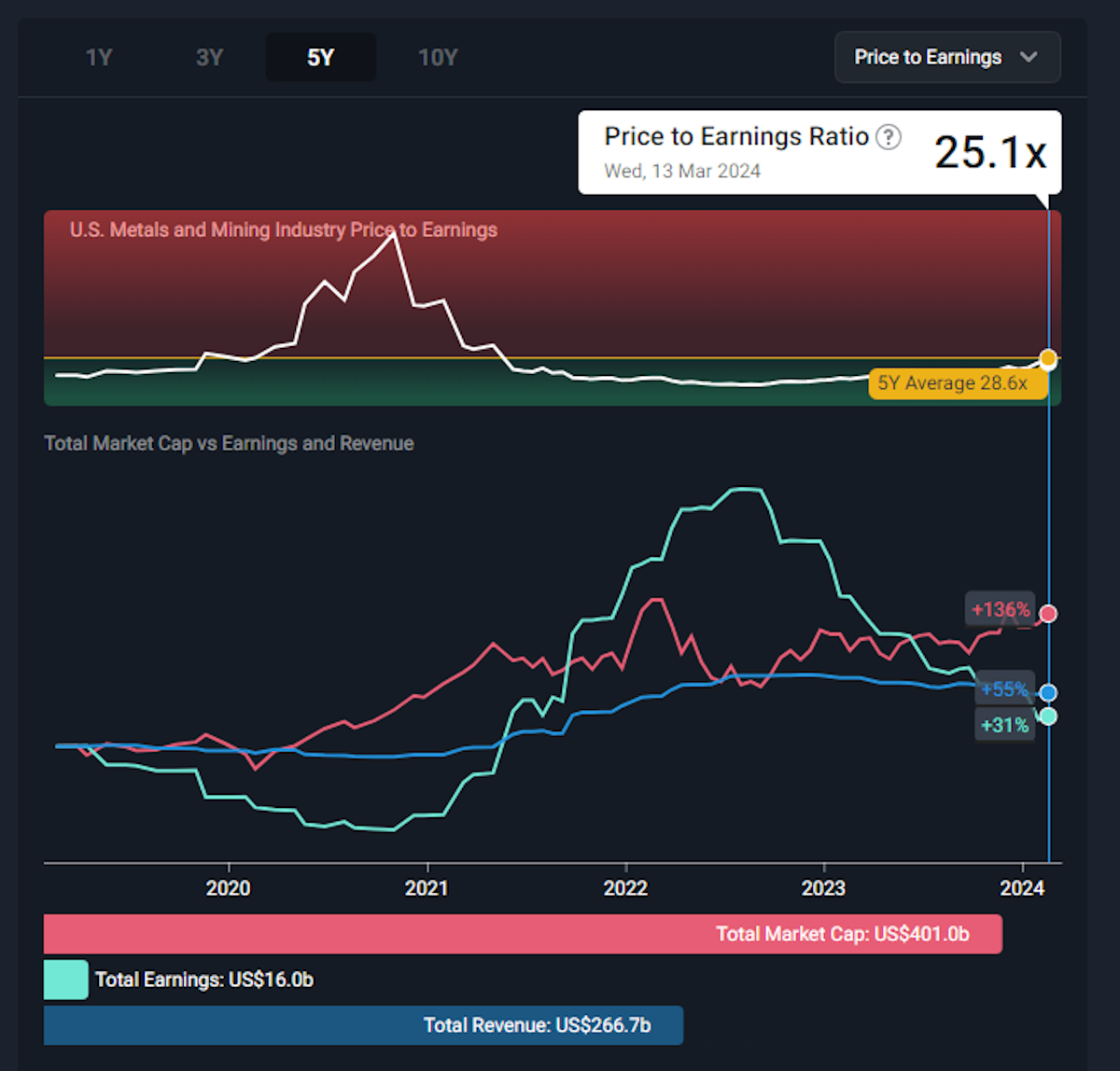
Based on analysis, although the P/E multiple remains below its five-year average, it may be misleading due to the exceptionally high peak observed in 2020. More significantly, the rising P/E ratio indicates an increasing level of optimism.
The outlook for battery metals, specifically lithium, cobalt, and nickel, is more cautious.
While production has risen over the past few years, demand growth has stagnated. This trend will likely continue until electric vehicle (E.V.) production picks up again or battery storage is adopted more widely in other sectors.
You can explore this narrative on Tesla, which examines potential growth opportunities within their Energy Storage segment.
Agricultural Commodities Present a Mixed Picture
Following the global food shortages in 2022, agricultural production has rebounded, leading to significant wheat and corn harvests worldwide. Recently, China has canceled multiple wheat import orders from the U.S. and Europe, citing abundant local supplies at lower prices.
However, crops grown nearer to the equator, such as rice, cocoa, sugar, and coffee, have been adversely affected by extreme weather conditions, keeping prices elevated. For instance, cocoa prices have surged by 186% over the past year. So, don’t be surprised if your hot chocolate becomes significantly more expensive!
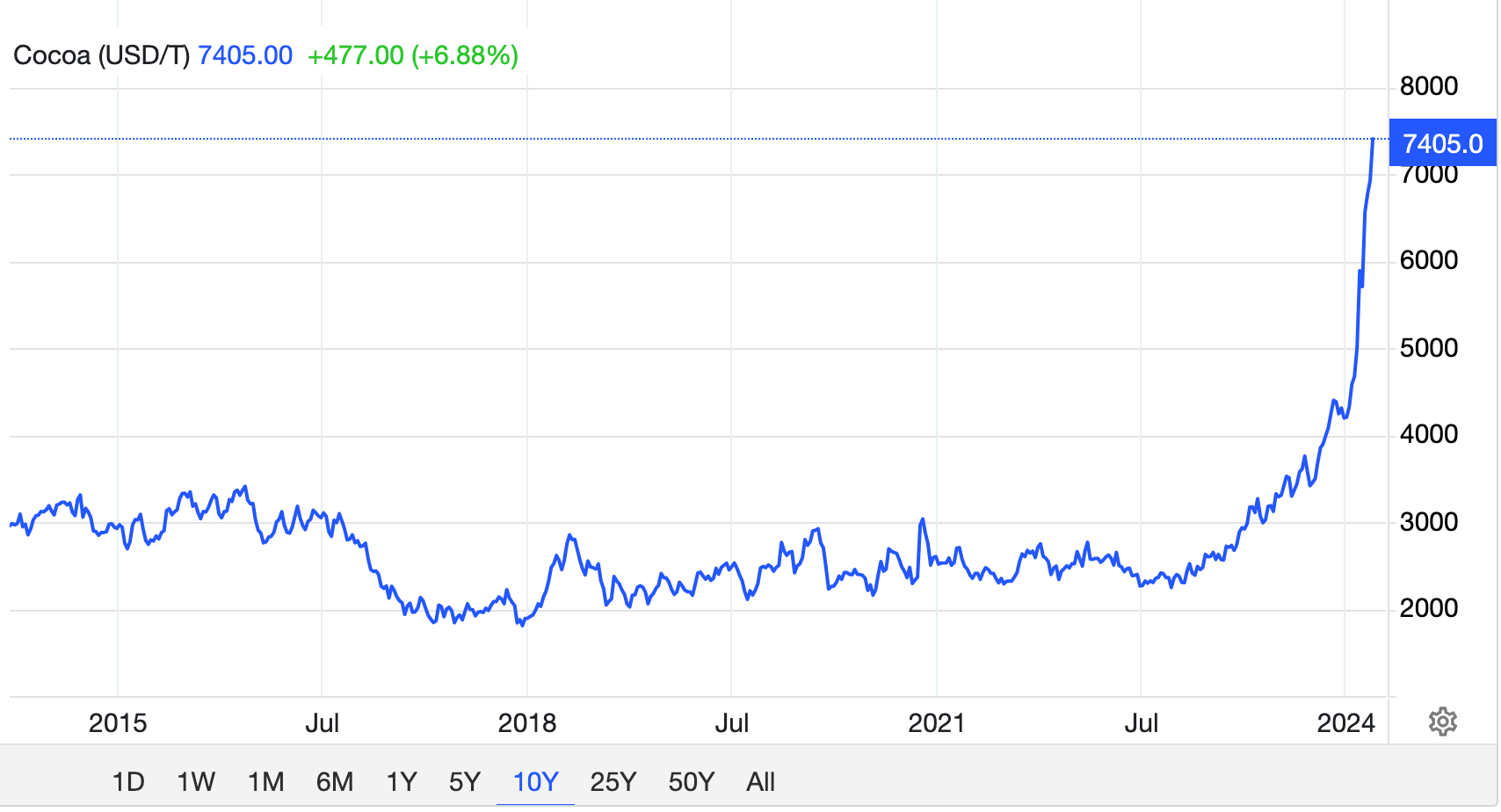
According to Trading Economics, worries continue about declining cocoa supplies from West Africa. Traders have reported that the leading exporter, Ivory Coast, and Ghana, the second-largest producer, are experiencing their worst harvests in years, with Ivorian arrivals projected to be down over 28% compared to the previous season.
Moreover, analysts have indicated that for other agricultural commodities, the risks lean toward higher prices due to the ongoing El Niño weather phenomenon, which is now in its second year, along with threats to global shipping routes.
Commodity prices are notorious for their volatility. However, these price fluctuations often stem from relatively minor imbalances in supply and demand.
The actual consumption of commodities is stable, generally increasing almost every year. It stands to reason that growing populations and expanding industries will require more raw materials, such as commodities, to sustain their growth.
The chart below illustrates global crude oil consumption from 2005 to 2023. The exceptionally atypical COVID-19 pandemic in 2020 led to a 9% decline in demand, followed by a 6% rebound the next year. Demand has typically increased by nearly 1% each year for the rest of the period.
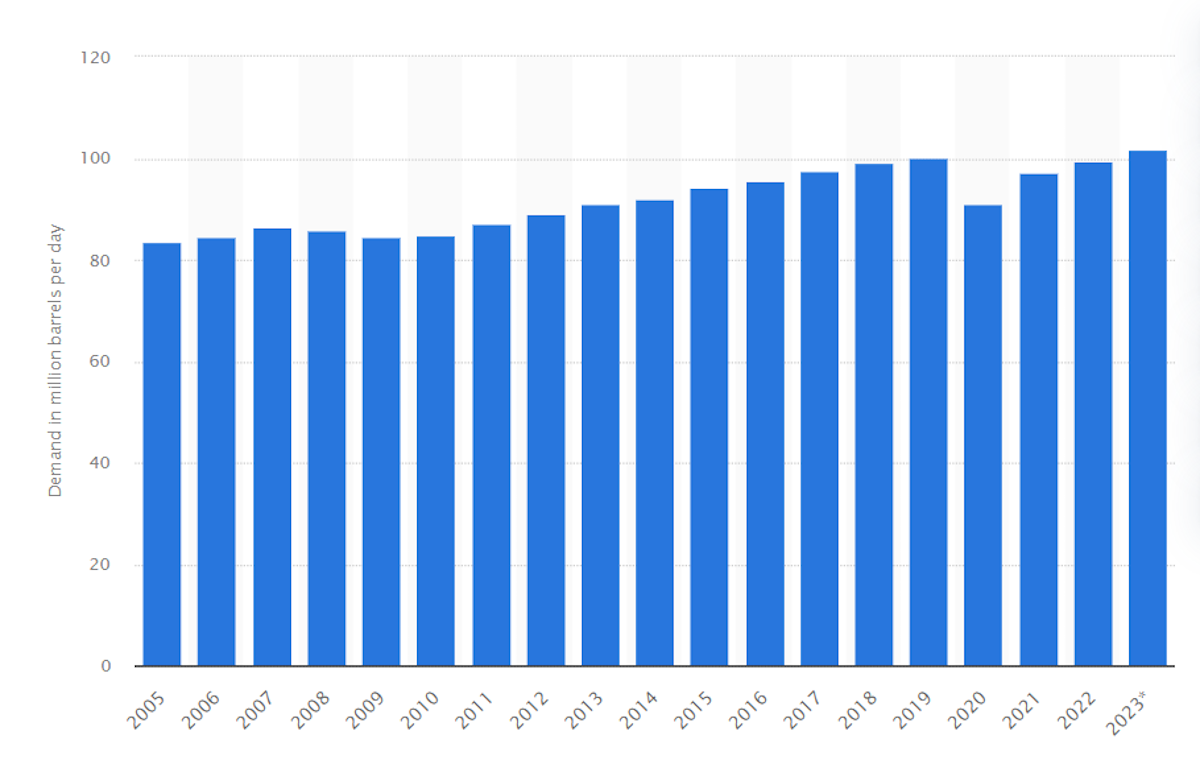
Most commodities exhibit a common trend, with consumption gradually increasing year after year. When prices decline, investment in new production tends to decrease as well, but demand continues to rise. This creates a scenario where prices inevitably rebound once demand surpasses supply.
Eventually, the world will encounter ‘peak oil’ as the shift towards clean energy progresses, adding a unique twist to the situation. Oil demand may remain steady for several years before it begins to decline. However, investment in new production capacity is likely to fall short, which could result in rising oil prices even as demand decreases.







Hi, i think that i saw you visited my weblog thus i came to “return the favor”.I’m trying to find things to improve my website!I suppose its ok to use some of your ideas!!