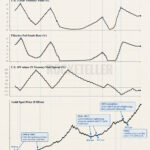
This chart is showing one very simple but very important thing: how much of the entire ETF universe is allocated to commodity ETFs, excluding precious metals. In plain English, it tells you how much investor attention and capital is flowing into the commodity trade as a share of all ETF assets.
And the story is brutal.
Back in the post-crisis boom, commodity ETFs were hot. By late 2009, they reached roughly 3 percent of all ETF assets. That was the era when the world was coming out of crisis, China demand still mattered, reflation trades were alive, and investors wanted hard assets with torque. Commodities looked like the place to be if you wanted to ride recovery, inflation, and global growth all at once.
Then the air slowly leaked out.
From that 3 percent peak, allocation kept fading for more than a decade until it collapsed to almost nothing, sitting near 0.09 percent by early 2026. That is not just a decline. That is capital abandonment. It tells you commodities have gone from crowded excitement to near-total irrelevance in portfolio construction.
Why does that matter for the commodity market? Because allocation drives sponsorship. When money leaves the space, liquidity thins, enthusiasm disappears, analyst coverage dries up, and valuations often stay depressed longer than fundamentals alone would justify. But there is a flip side. When ownership gets this low, the market becomes extremely sensitive to any real catalyst such as inflation, supply shocks, underinvestment, or stronger global demand. In other words, when nobody owns it, even a small wave of buying can hit prices like a hammer.