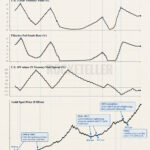
This chart is tracking one very specific thing, but it says a lot about the bigger market story. It shows the share of total ETF assets that is allocated to gold ETFs. In plain English, it tells you how much of the ETF world is choosing to sit in gold instead of everything else.
And the shape of the chart is the story.
Gold allocations exploded from 2008 into the 2011 to 2012 period, climbing above 8 percent. That was the fear trade in full force. Investors were dealing with the global financial crisis, sovereign debt problems, aggressive central bank stimulus, and a deep mistrust of paper assets. Gold became the financial fire escape.
Then came the unwind. As panic faded, growth stabilized, and confidence returned to equities and risk assets, capital rotated out of gold. That is why allocations collapsed so hard after the peak. Gold did not disappear, but it stopped being the center of attention. For most of the following decade, it became a smaller, quieter position in portfolios.
What matters now is the right side of the chart. Allocations are still historically low, even with a modest recent rebound. That means gold is not yet crowded. It is rising, but it is rising from a very depressed ownership base.
For the commodity market, that matters a lot. When gold starts attracting fresh institutional capital, it can improve sentiment across the whole hard-asset complex. It can lift miners, strengthen the inflation trade, and make investors more willing to revisit commodities broadly. So this chart is really about positioning. Gold is no longer abandoned, but it is still far from loved.