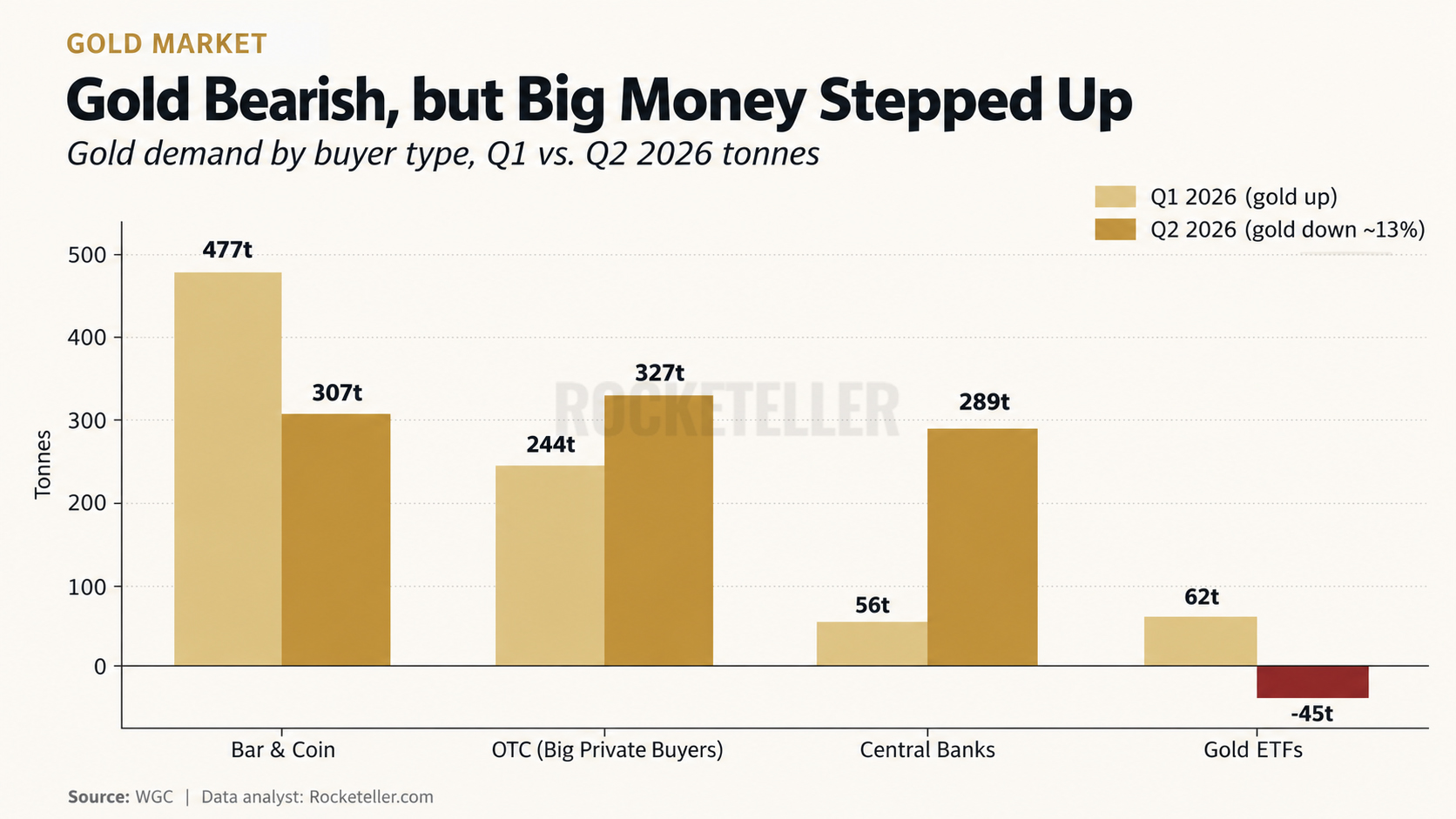
Gold fell, and the obvious trade was to run for the exits. Except some of the biggest buyers did exactly the opposite. In Q2 2026, gold ETFs flipped from buying 62 tonnes to selling 45 tonnes. Retail bar and coin demand cooled from 477 to 307 tonnes. At first glance, that looks bearish. But look closer.
Central banks ramped up purchases from 56 to 289 tonnes, while over-the-counter (OTC) demand surged from 244 to 327 tonnes. Suddenly, the story looks very different. So what happened?
As gold corrected, a stronger US dollar and rising interest rate expectations pressured speculative investors. Meanwhile, central banks saw an opportunity to accumulate. Their priorities were different: reserve diversification, geopolitical uncertainty and long-term financial security. Private market demand also strengthened, particularly in Asia, although OTC figures include estimated flows rather than exclusively direct purchases. Now, here’s where the commodity story gets interesting.
If central banks continue accumulating gold, their buying could provide structural support for precious metals. Higher sustained gold prices would improve mining margins, potentially benefiting undervalued gold producers and eventually smaller exploration companies. Silver could follow if investment appetite returns. Copper and other industrial commodities, however, still need stronger economic demand to participate.
But don’t mistake this for an automatic commodity supercycle. A strong dollar and restrictive monetary policy can still pressure the entire sector. The real takeaway? Gold’s correction may have shaken out shorter-term investors while longer-term buyers accumulated. Sometimes the most important market signal isn’t where the price is going. It’s who’s buying when everyone else hesitates.