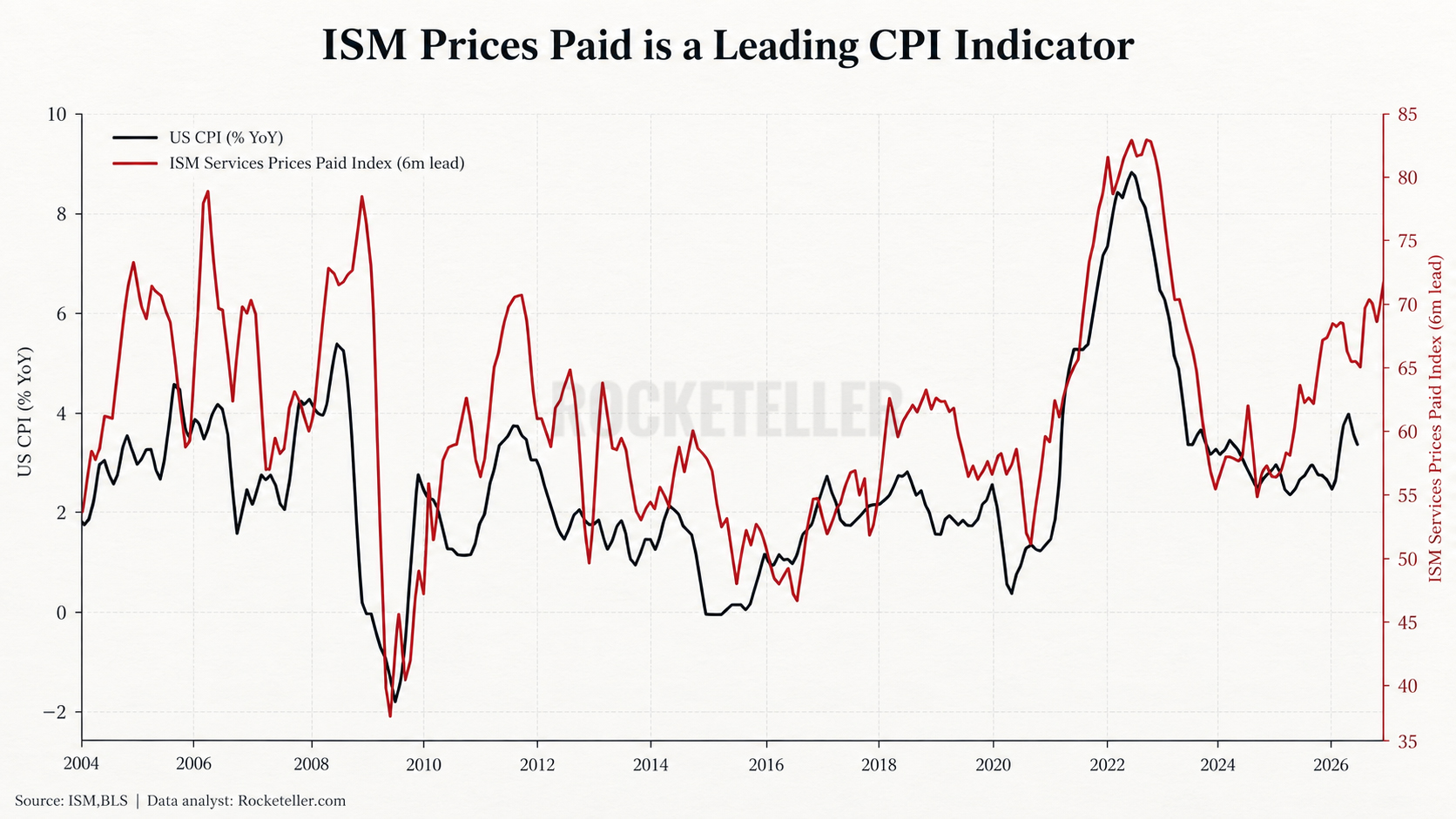
This chart tells a simple story, when inflation changes the rules, the assets that investors ignore can suddenly become the assets everyone wants.
During the 1970s, the global financial system was hit by a powerful combination of currency instability, oil shocks, supply shortages, negative real interest rates and persistent inflation. The end of Bretton Woods weakened the old monetary anchor, while the 1973 oil embargo and later energy disruptions pushed costs through the economy. Cash and bonds struggled to preserve purchasing power. Hard assets did the opposite.
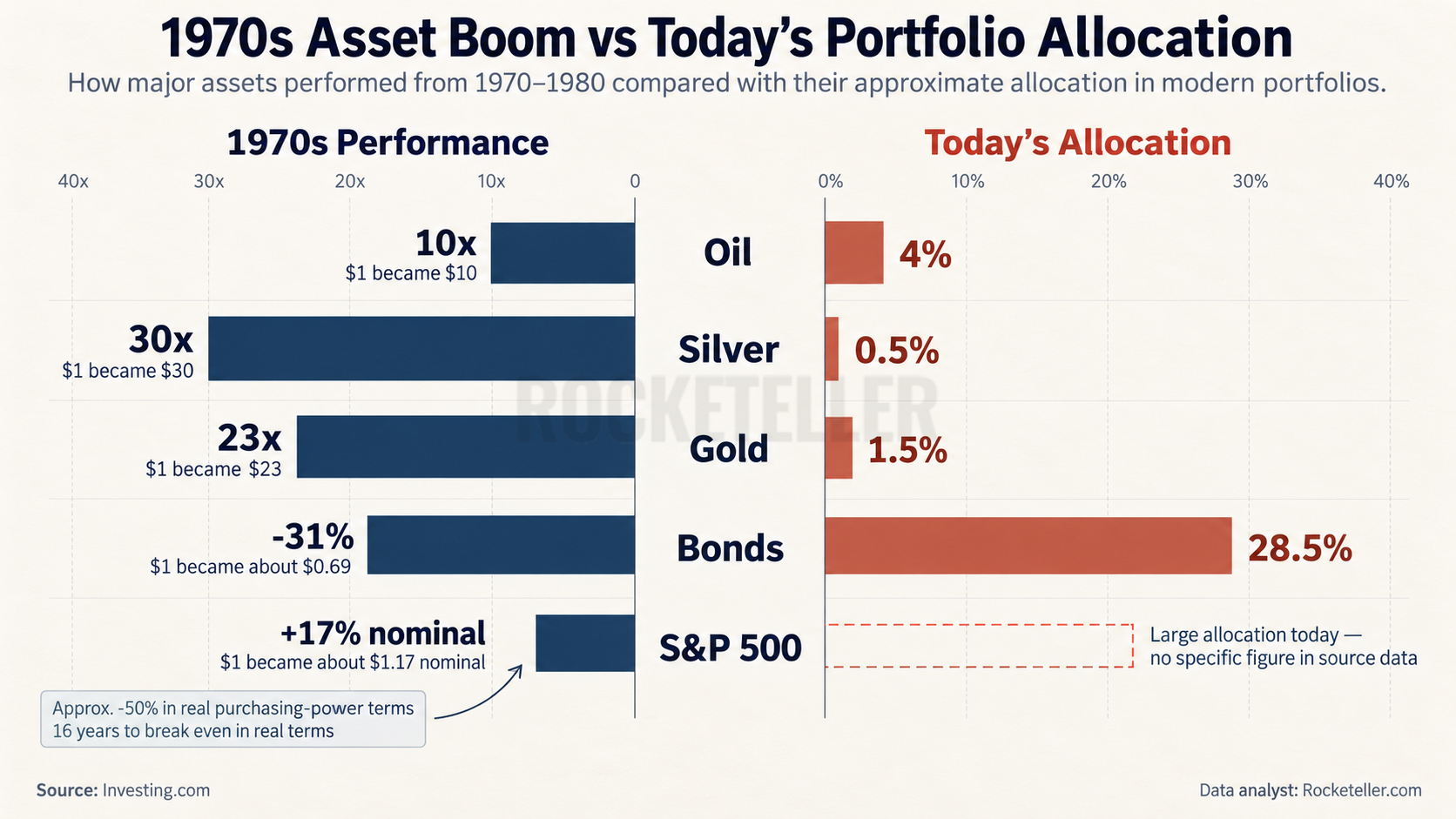
Oil rose roughly 10x. Gold multiplied about 23x. Silver exploded roughly 30x. Meanwhile, bonds lost purchasing power and the S&P 500 delivered only a modest nominal gain, which looked far worse after adjusting for inflation.
Now look at the right side. Modern portfolios remain heavily tilted toward financial assets, while direct allocations to gold, silver and oil are comparatively small. That matters because commodity markets are much smaller than stock and bond markets.
If inflation stays elevated, currencies weaken, real yields fall, or supply remains constrained, even a modest rotation of capital toward commodities could have an outsized price impact. There simply does not need to be a massive portfolio shift. A small percentage moving from a large pool of financial assets into a much smaller commodity market can create powerful demand. That is the real message here. The 1970s are not guaranteed to repeat, but the setup reminds investors that crowded portfolios can become vulnerable when the macro regime changes.