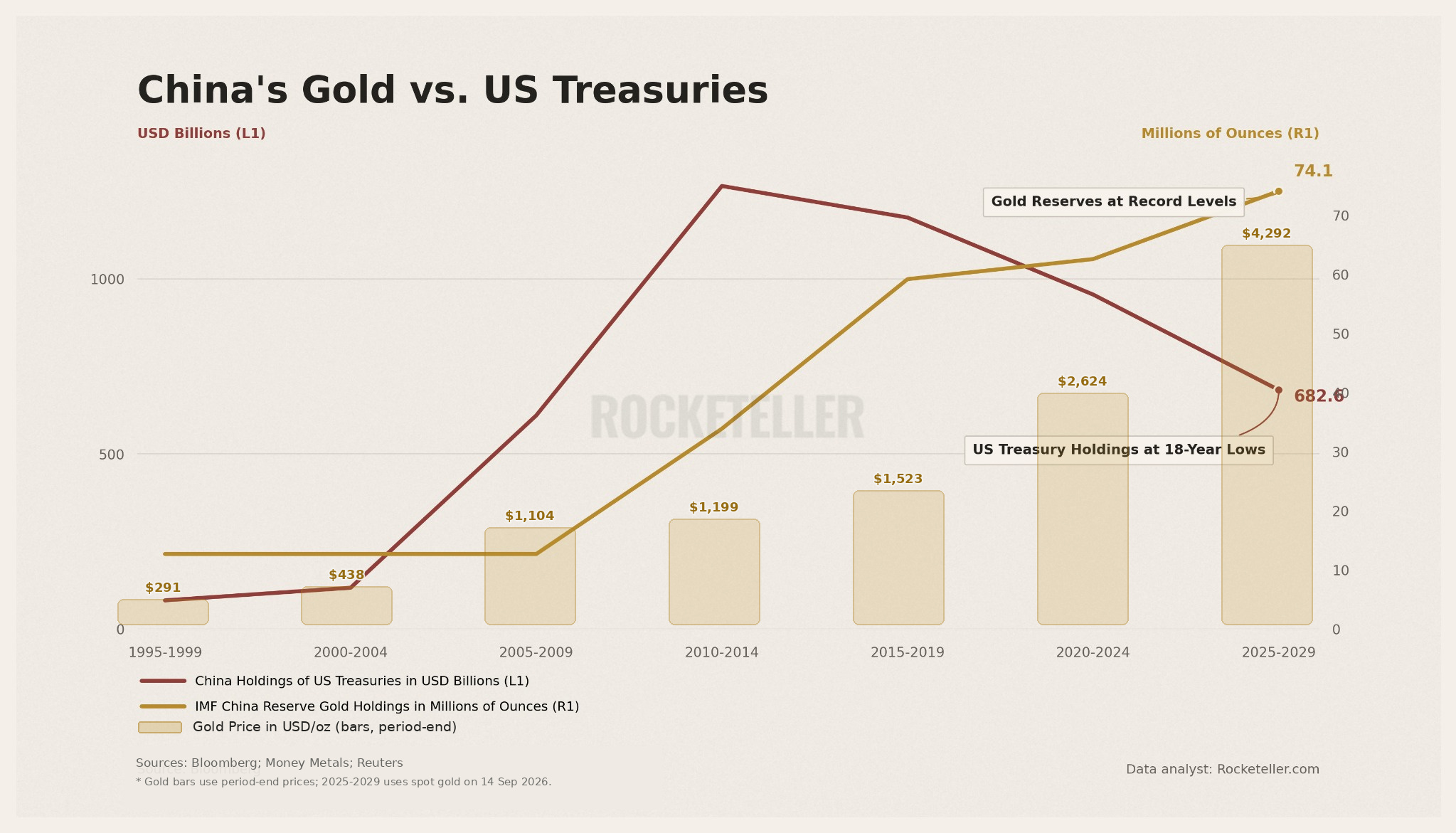
This chart tells a much bigger story than gold going up. China has been steadily reducing its exposure to US Treasuries while pushing its gold reserves to record levels. At the same time, gold itself has exploded from roughly $291 an ounce in the late 1990s to more than $4,200 dollars today.
The message is clear. China is gradually shifting part of its reserve system away from paper claims on the US government and toward a physical monetary asset that carries no counterparty risk. This does not mean China is abandoning the dollar overnight. It means Beijing appears to be reducing concentration risk and building a reserve base that is harder to sanction or politically influence.
The cause is a mix of geopolitics, sanctions risk, rising US debt, currency diversification and a desire for financial independence. The effect matters because central-bank gold buying creates a structural source of demand that is less sensitive to price than ordinary investors.
For commodities, gold is the first and most direct beneficiary. But the bigger signal is the return of hard assets as strategic reserves. If more countries follow the same path, capital can gradually rotate toward scarce physical assets during periods of currency weakness, inflation and fiscal stress.
That does not mean every commodity rises together. Oil, copper and agriculture still depend on supply, demand and economic growth. But a world that trusts paper assets less tends to place a higher premium on real assets. Gold may simply be leading that repricing.