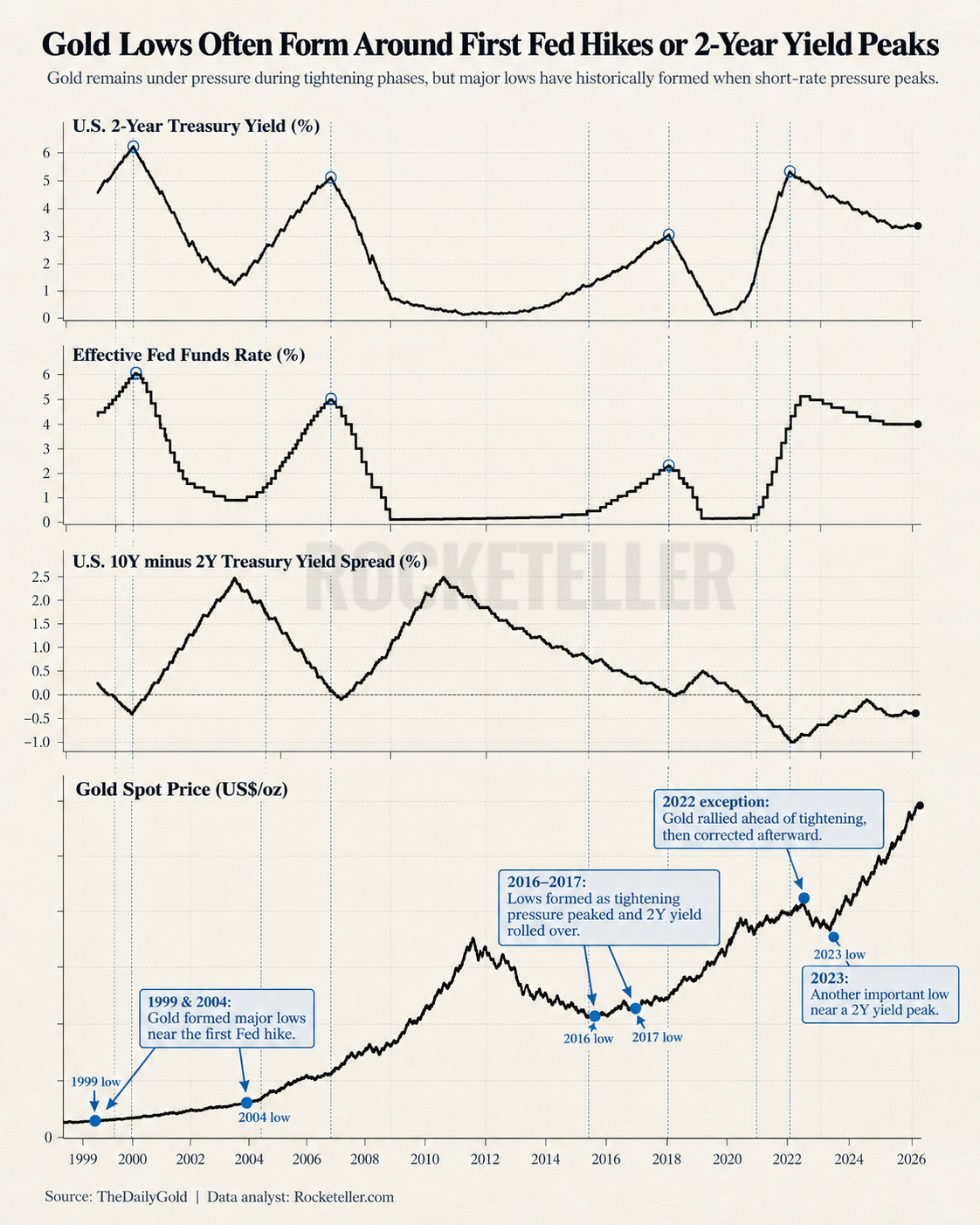
This chart tracks two parts of the US bond market from 2021 to early 2026. The blue line is the 3-month Treasury yield, which reflects short-term interest rates and is heavily driven by the Federal Reserve. The red line is the 30-year bond yield, which reflects long-term expectations for inflation, growth, debt supply, and investor confidence.
The big story is the split between the two. The 3-month yield surged as the Fed slammed rates higher to fight inflation. That was the policy shock. Cash suddenly paid something. Short-term money got expensive. But then, as the cycle matured, the 3-month yield rolled over. That suggests the market is starting to price in easier policy ahead, or at least the end of peak tightness.
Meanwhile, the 30-year yield stayed elevated and even pushed higher. That tells you long-term inflation and fiscal concerns are not fully disappearing. In simple terms, the market is saying the Fed may cut later, but the long-run cost of money could still stay high.
For commodities, that creates a mixed but very important setup. Falling short-term yields can help liquidity, improve risk appetite, and reduce pressure on gold and silver because the cash alternative becomes less dominant. But high long-term yields can also signal sticky inflation, heavy government borrowing, and structural distrust in paper assets. That tends to support hard assets over time.
So this is not just a bond chart. It is a map of monetary stress, future policy shifts, and the kind of macro backdrop where commodities can stop acting sleepy and start acting important.