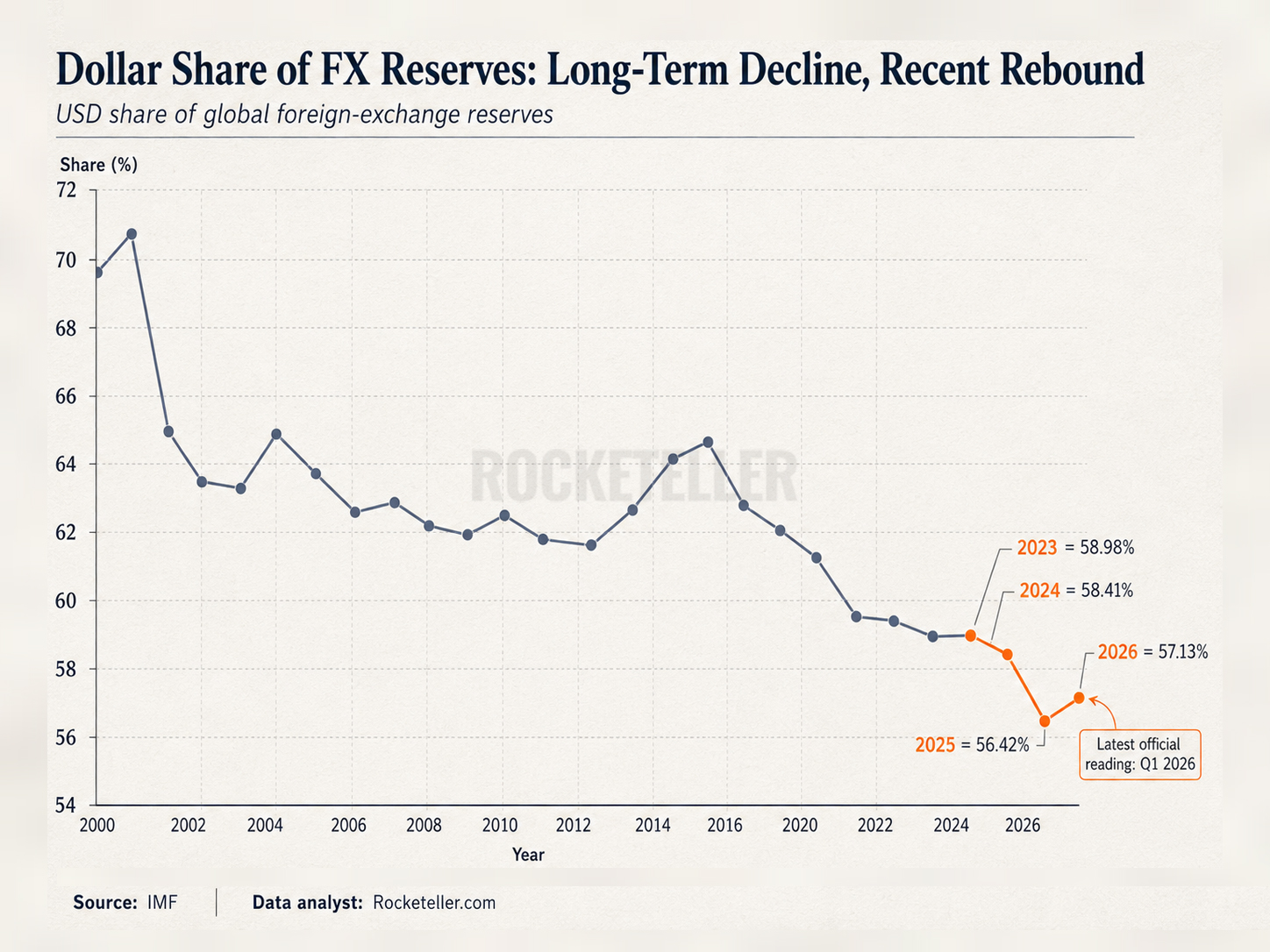
The chart tells a simple but powerful story. The US dollar is still the dominant reserve currency, but its grip on the global financial system has been slowly loosening. In 2001, the dollar represented more than 70% of global foreign exchange reserves. By 2025, that share had fallen to roughly 56% before rebounding to 57.13 in early 2026. That rebound matters, but it does not erase the bigger trend. Central banks have spent two decades gradually diversifying away from the dollar.
Why? Part of it is diversification. Countries do not necessarily want all their financial eggs sitting in one American basket. Rising US debt, geopolitical tensions, sanctions risk, changing trade relationships and the growing role of gold have all encouraged central banks to spread reserves across more assets and currencies.
This is where commodities enter the story. Most major commodities, including gold, silver, copper and oil, are priced in dollars. When the dollar weakens, those commodities become cheaper for buyers using other currencies. That can stimulate demand and push nominal commodity prices higher.
Gold is the clearest beneficiary. Central banks reducing dollar exposure have increasingly treated gold as a neutral reserve asset. It carries no foreign government credit risk and cannot be printed by a central bank. But declining dollar reserve share does not automatically mean a commodity supercycle. Real interest rates, Chinese demand, global liquidity and economic growth still matter enormously. The bigger signal is structural. If reserve diversification continues while US debt keeps expanding, the monetary backdrop becomes increasingly supportive for scarce real assets.