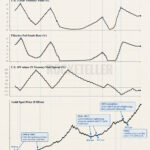
Here’s the real message of this chart.
It shows how small the mining industry has become relative to the total global stock market. Back in the early and mid 1900s, mining made up a much larger share of global equities, at times around 10 to 11 percent. Today, that figure has fallen to just 1 percent, which is why the chart calls it record lows.
That matters more than most people realize.
Mining is the industry that feeds the real economy with raw materials. Copper, iron ore, silver, gold, nickel, uranium, coal, and other resources do not appear by magic. They have to be discovered, financed, permitted, developed, and produced. But when mining becomes this small in the capital markets, it usually means the sector has been neglected for years. Less investor attention often leads to less funding, fewer new projects, weaker exploration, and eventually tighter future supply.
Now connect that to commodities.
If global demand stays firm or rises, especially from electrification, infrastructure, defense spending, and industrial rebuilding, while supply growth stays slow, the setup becomes bullish for commodity prices. In simple terms, when the world needs more stuff but has underinvested in finding and producing it, prices tend to move higher. That can later pull capital back into mining stocks, often very aggressively.
So this chart is not just about a forgotten sector. It is a picture of capital starvation. And capital starvation in mining has a habit of showing up later as commodity inflation, supply shortages, and sudden revaluations across the resource space.