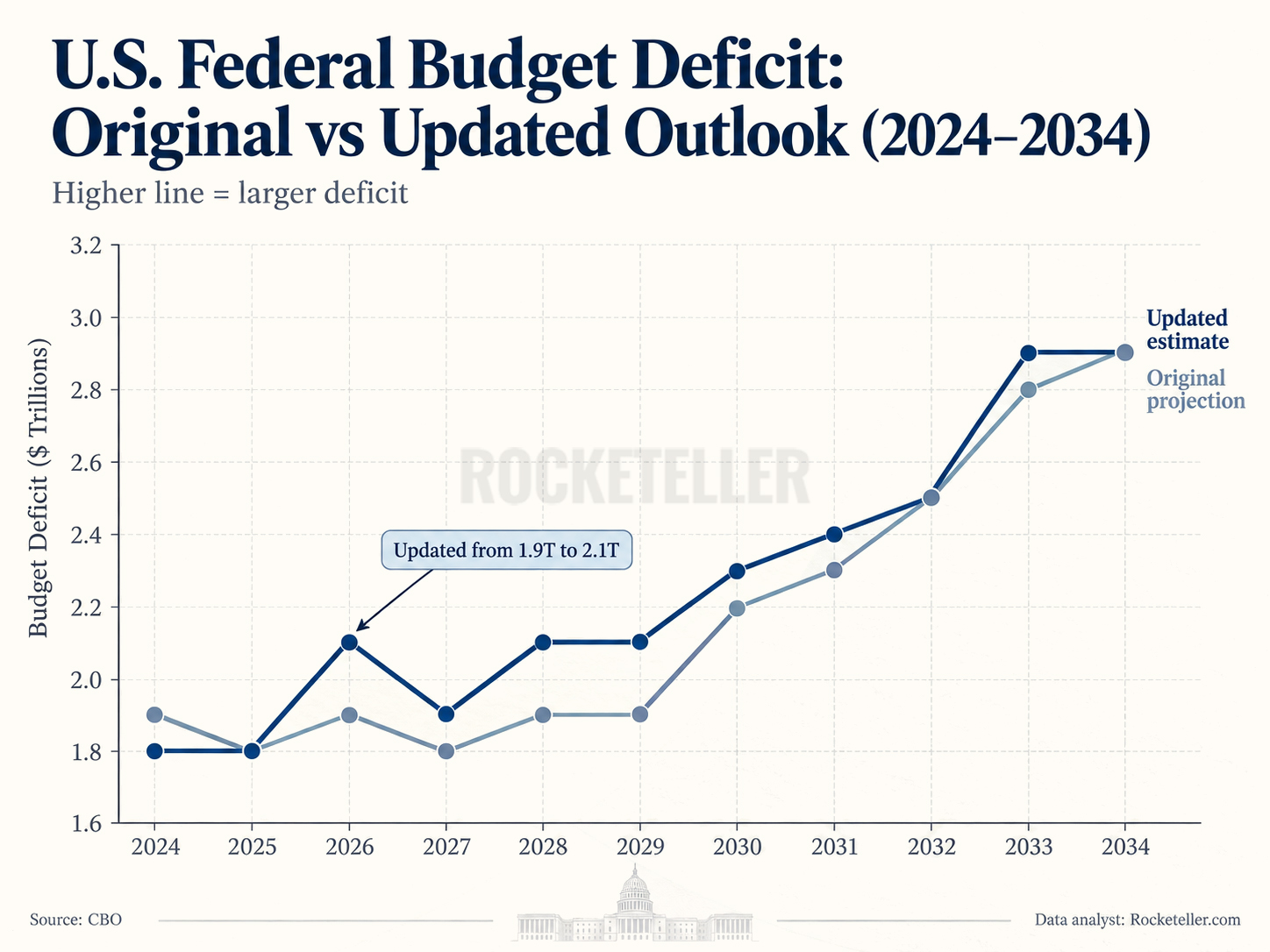
This chart is basically a warning light for America’s fiscal engine. The original CBO projection already showed the United States running deficits close to $2 trillion a year. The updated outlook makes the picture slightly worse, especially from 2026 onward. The clearest change comes in 2026, where the deficit rises from an expected $1.9 trillion to roughly $2.1 trillion.
Larger deficits mean the government must borrow more money to fund spending that tax revenue cannot cover. More borrowing normally means more treasury issuance. If investors demand higher compensation to absorb that debt, bond yields can stay elevated even while the Federal Reserve attempts to lower short term interest rates.
Now things get interesting for commodities. Persistent fiscal deficits can keep money circulating through the economy, support nominal demand and make inflation harder to completely kill. If markets begin believing government spending will remain structurally high while debt continues expanding, investors may increasingly search for assets that cannot simply be printed.
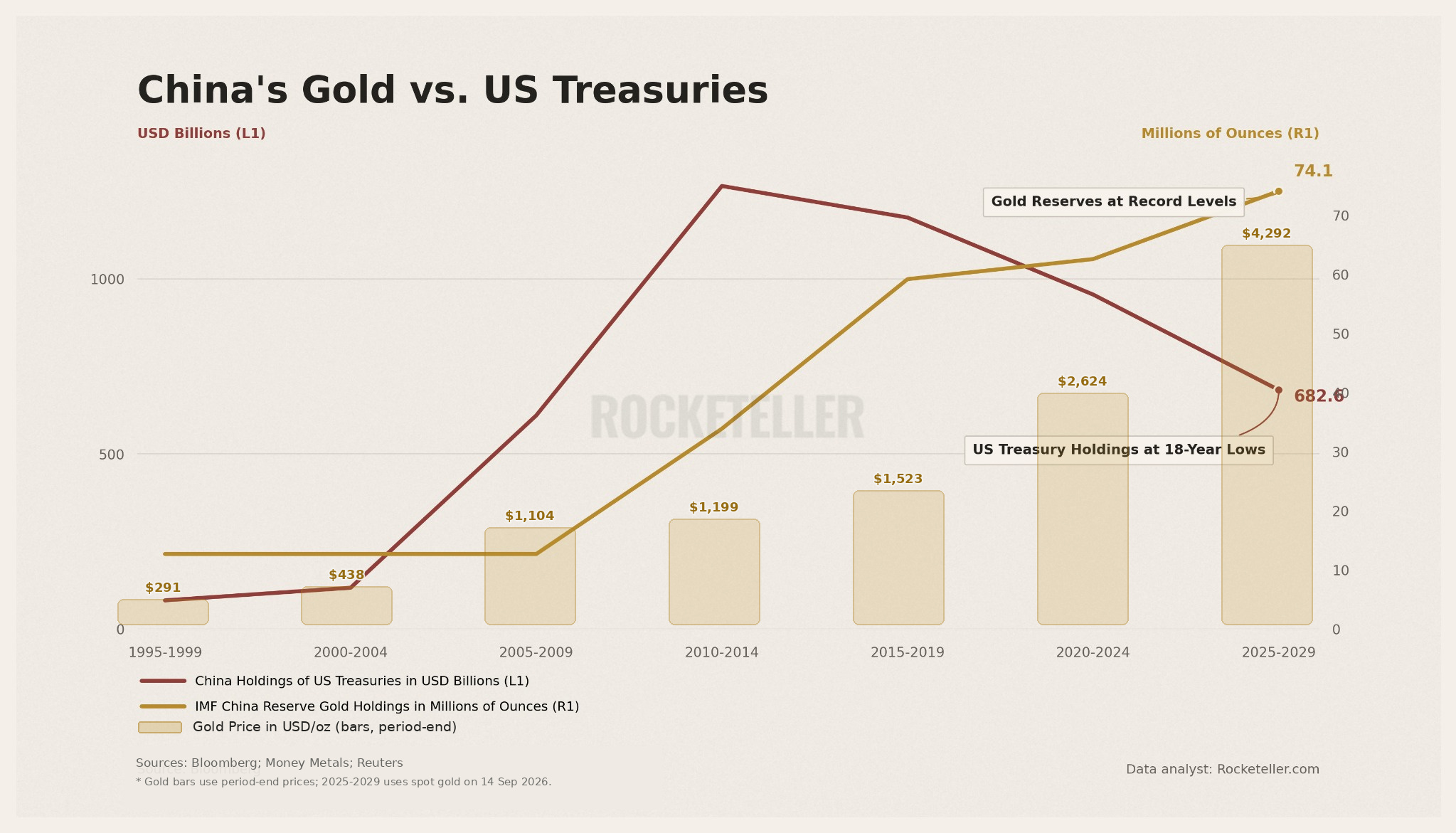
That is where gold usually enters the conversation first. Gold tends to benefit when confidence in the purchasing power of currencies weakens, real interest rates fall, or investors become worried about long term fiscal sustainability. Silver can follow, often with more volatility.
Industrial commodities are more complicated. Copper, oil and other raw materials still need real economic demand. Big deficits can support infrastructure, manufacturing and consumption, which is positive. But if borrowing pushes interest rates too high and eventually damages growth, commodities can suffer temporarily.