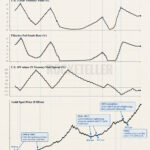
This chart is showing something surprisingly important. Gold is still a very small piece of global investable wealth.
The gold line tracks gold’s private investment share of global equities and bonds over time. In plain English, it asks a simple question: out of all the money parked in stocks and bonds around the world, how much is sitting in gold? The answer is, not much. Outside of the late 1970s and early 1980s panic period, gold has mostly lived below the lower end of what many portfolio models consider a normal strategic allocation range. That is the green-to-red band between 2 percent and 8 percent.
That is why the chart matters. It suggests gold is not crowded. It is not overowned. It is still under-allocated relative to the size of global financial assets.
Now think about the knock-on effect for commodities. When gold is under-owned, it means institutional capital has plenty of room to rotate into hard assets if macro conditions change. And those conditions are not hard to imagine. Sticky inflation, falling confidence in sovereign debt, weaker real yields, currency debasement, recession risk, or geopolitical stress can all push investors to rebuild gold exposure.
If that happens, the move can be powerful because gold is a small market relative to the ocean of money in stocks and bonds. Even a modest portfolio reallocation can create a large price response. And once gold starts moving, it often lifts sentiment across the broader commodity complex. Silver usually wakes up, miners gain torque, and investors start revisiting real assets as a whole. So this chart is really a quiet warning. Gold is still under-owned, and that leaves the commodity market with a lot of upside optionality.