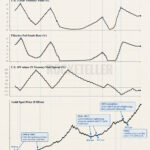
This chart shows one of the most important shifts in modern markets, and it is hiding in plain sight.
Back in the early 1990s, Materials and Energy made up a much larger share of the SP500, than Information Technology. That made sense. The economy still leaned heavily on physical industry, raw materials, fuel, machinery, and the old backbone of growth. But over time, the market started rewarding a very different kind of business. Software scaled faster than steel. Platforms earned higher margins than pipelines. Code became more valuable than copper, at least in market cap terms.
By 2026, the gap is enormous. Information Technology has climbed to 32.3 percent of the index, while Materials and Energy have fallen to just 5.5 percent. That is not a small rotation. That is a total change in what the stock market considers important.
Now here is where it gets interesting for commodities. When Materials and Energy shrink this much inside the benchmark, capital naturally follows. Less weight often means less passive flow, less investor attention, less research coverage, and lower valuations relative to the rest of the market. In plain English, the market has been starving the sectors that actually dig, drill, refine, and build the real economy.
That can suppress investment for years. And when underinvestment collides with rising real-world demand, especially from electrification, grid expansion, defense, and infrastructure, commodity markets can tighten fast. So this chart is not just about stock market leadership. It is about a world that has financially overweighted digital growth while structurally underweighting the industries that supply the physical inputs. And eventually, the real world sends the bill.