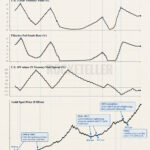
This chart is basically a stress test of gold’s personality across market cycles. It maps gold bull markets in blue and bear markets in red, showing how long each phase lasted and how much gold moved during that stretch. And the first thing that jumps off the page is this: gold’s down cycles can be ugly, but its up cycles have historically been bigger, longer, and far more explosive.
That matters because gold does not behave like a normal industrial commodity. It is not just reacting to factory demand or construction activity. Gold is a monetary asset wearing a commodity costume. So when fear rises, real yields fall, central banks ease, or confidence in paper assets starts to wobble, gold tends to wake up fast.
The chart shows that bear markets in gold have often been sharp drawdowns, with several declines around 20 to 45 percent and one near 59 percent. Painful, yes. But then you look at the rebounds. Several bull cycles delivered gains well above 100 percent, including one surge above 200 percent. That is the key lesson. Gold’s upside phases have historically done more than just recover the damage. They often overshoot and reprice aggressively.
This chart is a beautifully simple way of showing one of gold’s most important truths. Gold does not move in a straight line. It moves in cycles, and those cycles can be wildly uneven. On the blue side, you have bull markets where gold climbs hard and fast. On the red side, you have bear markets where it gives back part of that move, sometimes brutally. But the bigger message is not just that gold rises and falls. It is that the winning stretches have historically been larger than the losing stretches.
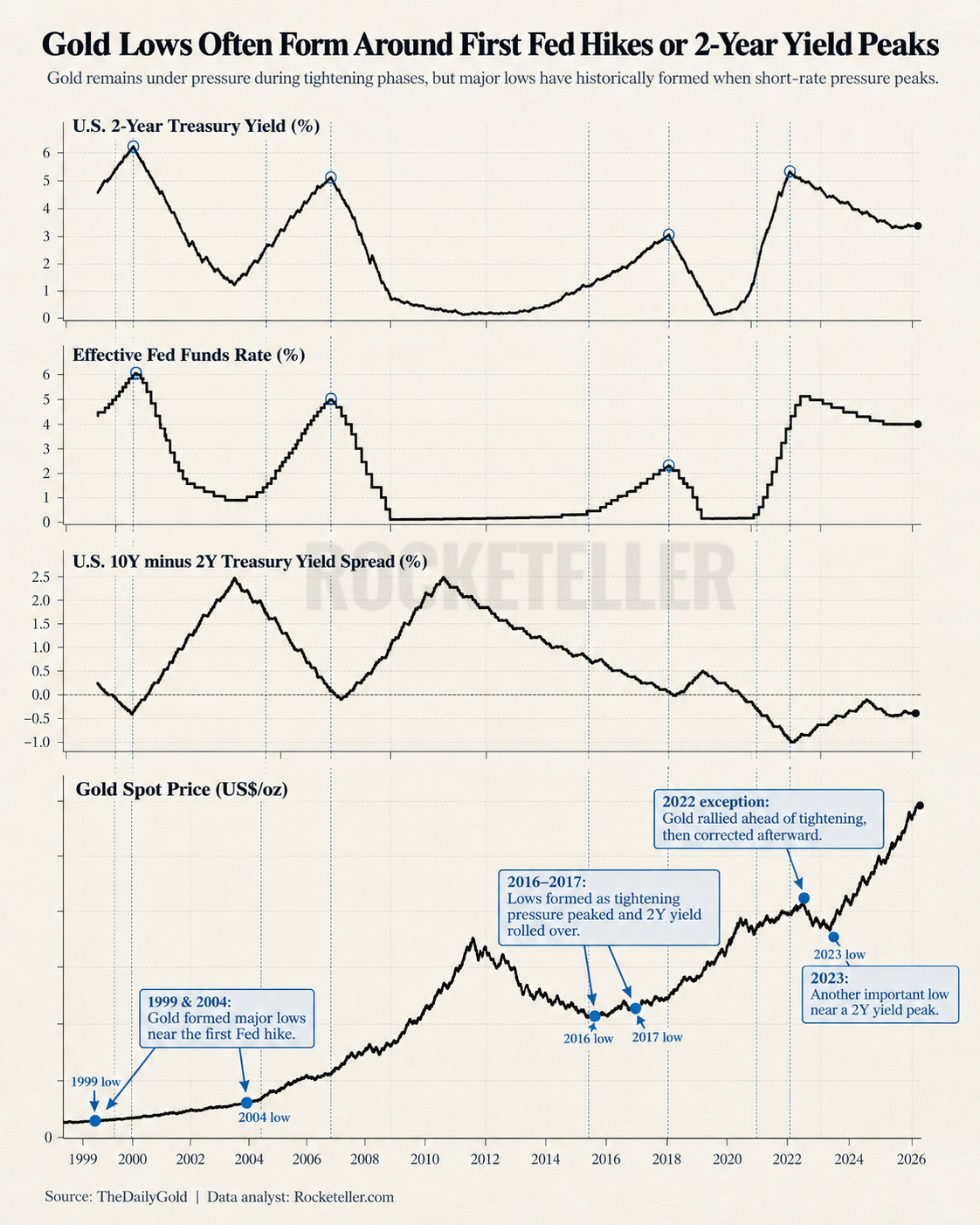
That matters because gold sits in a strange corner of the commodity world. It is technically a commodity, but it trades more like a barometer of trust. When investors trust growth, real yields, and paper assets, gold can drift or fall. When that trust weakens, gold tends to wake up. Lower real interest rates, looser central bank policy, rising inflation anxiety, currency weakness, or financial stress can all push capital toward gold.
So the cause and effect for commodities is powerful. A strong gold bull phase often signals that money is getting nervous about the financial system or the purchasing power of fiat currency. Gold usually reacts first because it is the purest monetary hedge in the commodity complex. Then, if that macro pressure broadens, silver, mining equities, and eventually other hard assets can follow. In other words, gold is often the first alarm bell, not the last trade.
This chart makes that crystal clear. Gold bear markets hurt, no question. But when the macro backdrop turns in its favor, gold has a long history of coming back bigger, louder, and with far more force than most people expect.