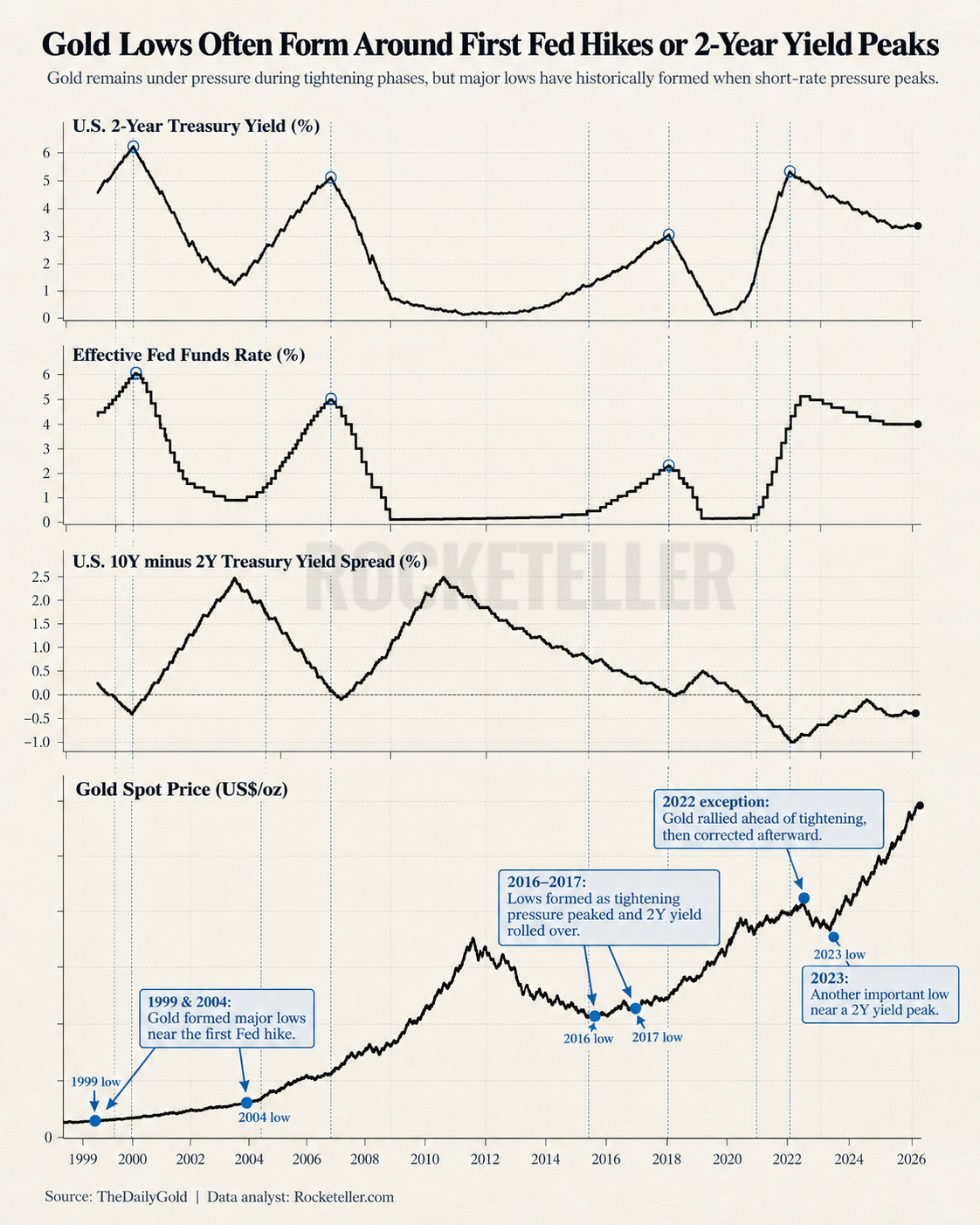
This chart is a long history of the yield curve, and in plain English, it is one of the market’s best mood meters for the economy.
Think of the yield curve as the gap between short-term interest rates and long-term interest rates. When that gap is wide and positive, the market is usually saying growth looks healthy, credit can flow, and the future still has some oxygen in it. But when that gap shrinks, flattens, or drops below zero, the message changes. Suddenly the bond market is whispering that policy is too tight, growth may cool, and something in the system could break later.
That is why this chart matters. It shows a repeating cycle. The curve climbs, peaks, rolls over, then often sinks hard. Those red circles are highlighting the moments when the curve reached elevated highs before turning. Historically, those turns often happen around major shifts in the macro cycle. Not every peak means instant trouble, but it usually tells you the easy part of the cycle is getting old.
For commodities, the effect is big. A steepening curve often supports cyclical commodities because it usually lines up with stronger demand, easier credit, and better industrial momentum. That can help oil, copper, steel, and broader resource equities. But when the curve inverts or stays weak, it tends to warn that demand could soften later. That is where industrial commodities can struggle. Precious metals can behave differently. If the curve is weak because growth is fading or policy credibility is cracking, gold often starts looking a lot more attractive.
In other words, this chart is not just rates. It is a scoreboard for liquidity, growth, and the commodity cycle.