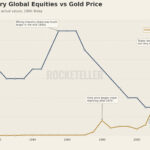
This chart shows what happened to the S&P 500 and gold during each U.S. recession since 1969, and the message is pretty clear. When the economy catches a cold, stocks often start sneezing first, while gold usually walks into the room wearing a raincoat.
Across these recession periods, the S&P 500 delivered an average return of negative 5.2 percent, while gold gained an average of 12.7 percent. That does not mean gold rises every single time. In 1980 and 1990, gold actually fell. But overall, gold tended to hold up better because investors often treat it as a financial shelter when confidence gets shaky.
The logic is simple. Recessions usually bring falling growth, weaker earnings, credit stress, and nervous investors. Stocks depend on future profits, so when people fear those profits may shrink, stock prices often get hit. Gold is different. It does not need a CEO, a sales forecast, or a perfect quarterly report. It mainly responds to fear, falling real interest rates, currency weakness, and demand for safety.
For the commodity market, this matters because gold can become the early warning signal. When gold starts outperforming stocks, investors may be rotating away from growth assets and toward hard assets. That can also lift attention toward silver, energy, and broader real assets, especially if the recession comes with inflation pressure or central bank easing.
So the big takeaway is not that gold is magic. The takeaway is that during economic storms, gold often becomes the umbrella investors reach for first.