
Our story didn’t start in stocks.
It started in the foreign exchange market. The land of flashing screens, fast clicks, and daily combat with price action. We spent nearly a decade there, trading actively, in and out of positions, day after day.
Back then, the playbook was straightforward. Think short term, move fast, stay sharp and keep one eye on the chart while the other tried not to blink.
It was intense. It was demanding. And it taught us a lot.
But here’s the part nobody puts on the glossy brochure.
Even with all that effort, the returns were usually around 0.8% to 1.5% a month, or roughly 10% to 20% a year in a good year. Respectable? Sure. Life-changing? Not exactly.
Because when you stack those returns against the time, stress, screen hours, and emotional wear-and-tear, the math starts to look a little less impressive. You were not just investing capital. You were investing attention, patience, sleep, and sometimes your sanity.
And that was in the good years.
The rough years were a different story entirely. Harder to predict, harder to manage, and far less forgiving. So while the numbers may have looked decent on paper, the overall result felt underwhelming for the amount of work required.
In the end, it was a valuable chapter, but also a revealing one. It showed us that being busy in the market is not the same as building real wealth.
Discovering Value Investing
At first, we were skeptical.
Coming from the world of short term trading, the idea of holding an investment for years felt almost offensive. Too slow. Too quiet. Too boring to possibly make serious money. In forex, we already knew the “hold it longer” approach, it was called swing trading, and we had been there.
But swing trading came with baggage. Plenty of it.
Weekend risk. Overnight swap fees. Wide spreads. Execution costs. Slippage. The longer you held the trade, the more little frictions crept in like uninvited guests at a dinner party. And in markets, those “little” costs have a bad habit of eating real money.
So naturally, we assumed long-term stock investing would be more of the same, just slower, with nicer branding.
We were wrong.
What we eventually discovered was value investing, and that changed the framework completely. This was not about babysitting price moves or trying to outduel every twitch in the market. It was about owning fundamentally strong businesses and letting time do the heavy lifting.
That is a very different game from short-term trading.
In forex, volatility often feels like an enemy you have to wrestle into submission. In long-term investing, volatility can become your accomplice. Sometimes even your shopping assistant. When prices swing but the business remains strong, the chaos stops looking like danger and starts looking like opportunity.
That realization changed everything.
It shifted us from chasing movement to understanding value. From reacting to noise to studying substance. From trying to predict every market hiccup to positioning for outcomes that could unfold over years, not hours.
And once that clicked, we could not unsee it.
Learning From Legends
Once that idea clicked, we went all in.
We immersed ourselves in the work of some of the most respected investors in history. Peter Lynch, Jim Rogers, Stanley Druckenmiller, Howard Marks, Charlie Munger. Books, interviews, podcasts, shareholder letters, old speeches, forgotten gems, if it contained hard-earned market wisdom, we were there.
And the effect was immediate.
These investors were not obsessing over every tick, twitch, and wiggle on a price chart like it was a cardiac monitor. They were focused on something far more powerful, understanding businesses, spotting cycles, studying valuation, and then, this is the part traders often hate, waiting patiently for the right opportunity.
That shift rewired how we saw the market.
Instead of reacting to every price movement like it was a five-alarm fire, we started asking better questions. What is this business actually worth? Where are we in the cycle? Is this price irrational, or is the crowd seeing something we are not? Suddenly, the game felt less like a daily knife fight and more like a strategic puzzle.
And compared with our old trading days, it felt dramatically more logical and far less exhausting.
Because when your edge comes from analysis, patience, and positioning, you no longer have to win every hour. You just have to be right when it matters.
That transition became the foundation for everything that followed. It pushed us to build a more structured framework for making investment decisions, one based not on noise, impulse, or market adrenaline, but on clarity, discipline, and repeatable thinking.
The Four Pillars of Our Investment Framework
Our investment approach is built around four key pillars.
These pillars form the foundation of how we analyze markets and identify opportunities.
- Macro Fundamentals
- Market Cycles
- Ratio Charts
- Technical Timing
No framework is perfect, but together these four perspectives provide a structured lens for interpreting markets.
They allow us to filter noise and focus on what truly matters.
Pillar 1: Macro Fundamentals
Markets do not move randomly over long periods.
They are driven by macro forces such as:
- interest rates
- monetary policy
- inflation cycles
- fiscal expansion
- demographic trends
- resource supply constraints
One of the most important macro developments today is the re-emergence of the commodity market. Historically, commodity move in super cycles, often lasting at least 15–20 years, some expert said 40-60 years.
Periods of underinvestment in resource production eventually lead to supply shortages. When demand catches up, prices begin a multi-year expansion phase.
We believe the world is entering another such phase. This macro backdrop strongly influences our investment allocation, particularly in sectors such as:
- precious metals
- energy
- natural resources
- commodity producers
Understanding the macro environment helps us determine which sectors deserve attention.
Pillar 2: Market Cycles
Markets move in cycles. This idea is not new. Many economists and investors have documented recurring patterns in economic and financial markets.
Some of the most well-known frameworks include:
These cycles are not precise prediction tools. Instead, they serve as probability frameworks.
They help answer questions such as:
- Are we early in a bull market?
- Are we approaching a speculative peak?
- Are markets entering a long consolidation period?
By studying historical cycles, we can better understand where we might stand in the broader financial timeline.
Pillar 3: Ratio Charts
Fundamental alone does not tell the full story.
Market can be pressed for decades before it come to reality.
Some of the most powerful signals in markets appear when comparing one asset to another. The ratio charts help reveal relative value between different asset classes.
Examples include:
- Gold vs S&P 500
- Gold Miners vs Gold
- Silver vs Gold
- Commodities vs Financial Assets
These ratios often move in multi-year trends, indicating shifts in capital flows across the global financial system. When a ratio breaks a long-term trend, it often signals a major change in market leadership. Money start to move in.
For long-term investors, ratio analysis can highlight where the next decade of opportunity may lie.
Pillar 4: Technical Timing
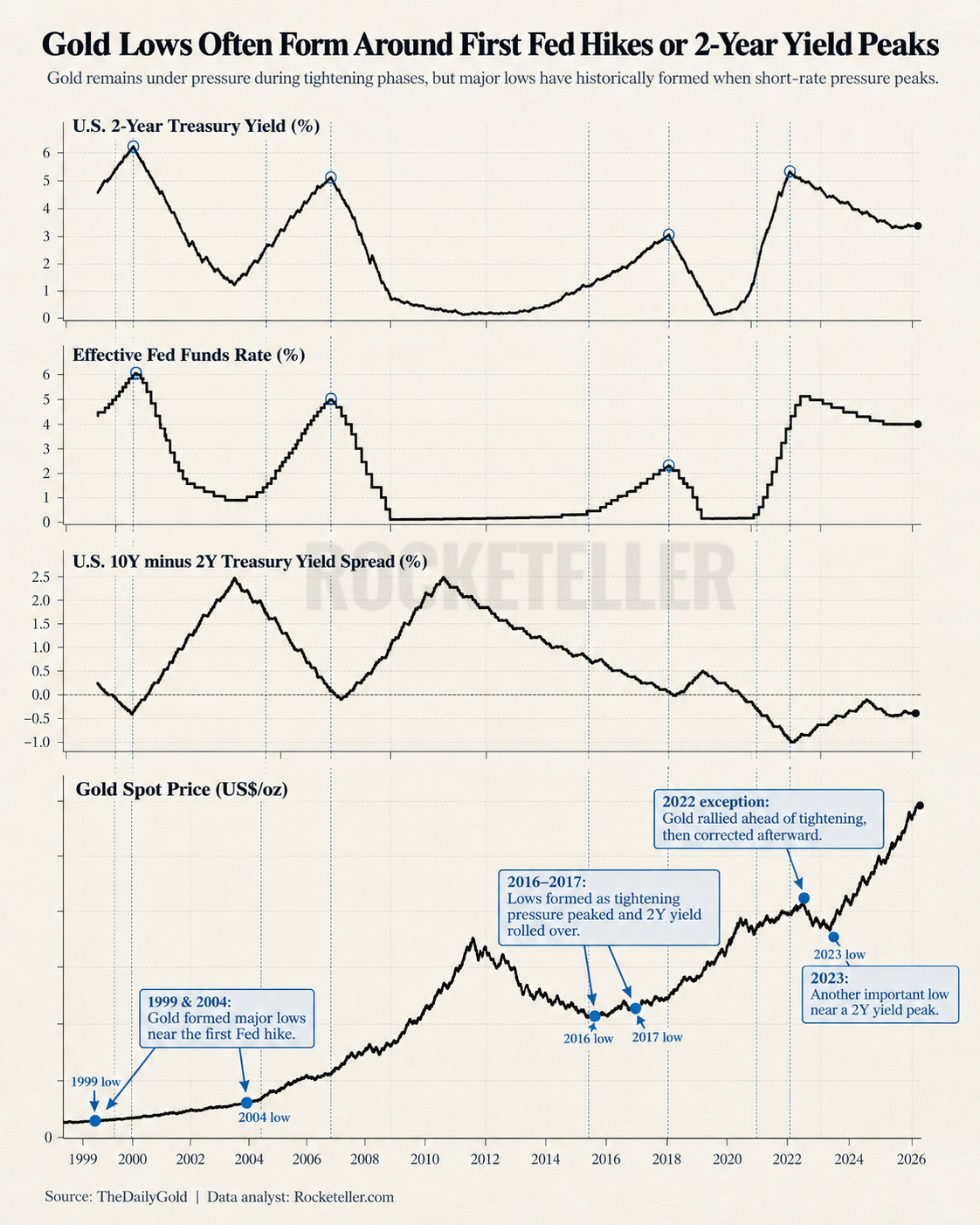
While macro analysis and valuation help identify opportunities, timing still matters. This where our decades of experience in previous market come to play. The technical analysis helps determine when to act.
We use technical tools to identify:
- major breakout levels
- long-term support and resistance
- volume & momentum shifts
- patterns recogntion
- trend confirmations
The goal is not short-term trading. Instead, technical timing helps us enter large structural trends at favorable moments. This improves risk-reward and reduces the emotional stress that often accompanies investing.
Bringing It All Together
Individually, each pillar provides useful insights. Together, they create a comprehensive investment framework.
The process works like this:
- Macro fundamentals identify promising sectors.
- Market cycles determine where we stand in the broader timeline.
- Ratio charts reveal relative value opportunities.
- Technical timing helps determine the optimal entry for asymmetrical risk to reward.
When all four pillars align, the probability of a successful investment increases significantly.
To be clear, we are not trying to hop in and out of positions every few weeks like caffeinated tourists.
Most of our ideas are built to play out over two to three years. Yes, that is a long stretch in market time. Long enough for narratives to flip, sentiment to swing, and the crowd to get distracted three times over. But that is exactly the point.
We are not here chasing 10% to 20% gains and calling it a victory lap. We are looking for 100% to 200% at a minimum.
Because once you start thinking in terms of multi-year compounding, the math gets very interesting, very quickly. A position held for four years that returns 200% works out to roughly 50% per year on average. And at that level, you are not just keeping up with most funds, you are putting serious distance between yourself and the pack.
That is the framework.
We are willing to give an idea time, but only because we expect the payoff to justify the wait. Patience, in our view, is not passive. It is capital discipline with standards.
And yes, we are always hunting for the rare beasts too, the 1,000% opportunities. The kind of setups that look almost ridiculous at first, right up until the market finally realizes what was sitting in front of it the whole time.
We are not aiming for motion. We are aiming for asymmetry.
The greatest investment gains in history have rarely come from daily trading. They have come from positioning early in powerful long-term trends and allowing time to do the heavy lifting.
Just like Howard Marks wrote in The Most Important Thing.
“Day traders considered themselves successful if they bought a stock at $10 and sold at $11, bought it back the next week at $24 and sold at $25, and bought it a week later at $39 and sold at $40. If you can’t see the flaw in this—that the trader made $3 in a stock that appreciated by $30.“
Get few more examples of our approach in investing in our free report, click here to download.






[…] you would like to start, we recommended here to begin. Click here to […]
[…] How we analyse it? Well, 4 pillars. Macro, cycles, ratios, technical timing. We want to cut this post shor, but we did elaborate deep our methodology and approach of investing, read more here. […]
[…] This is our thesis roadmap based on our methodological approach to investing. […]